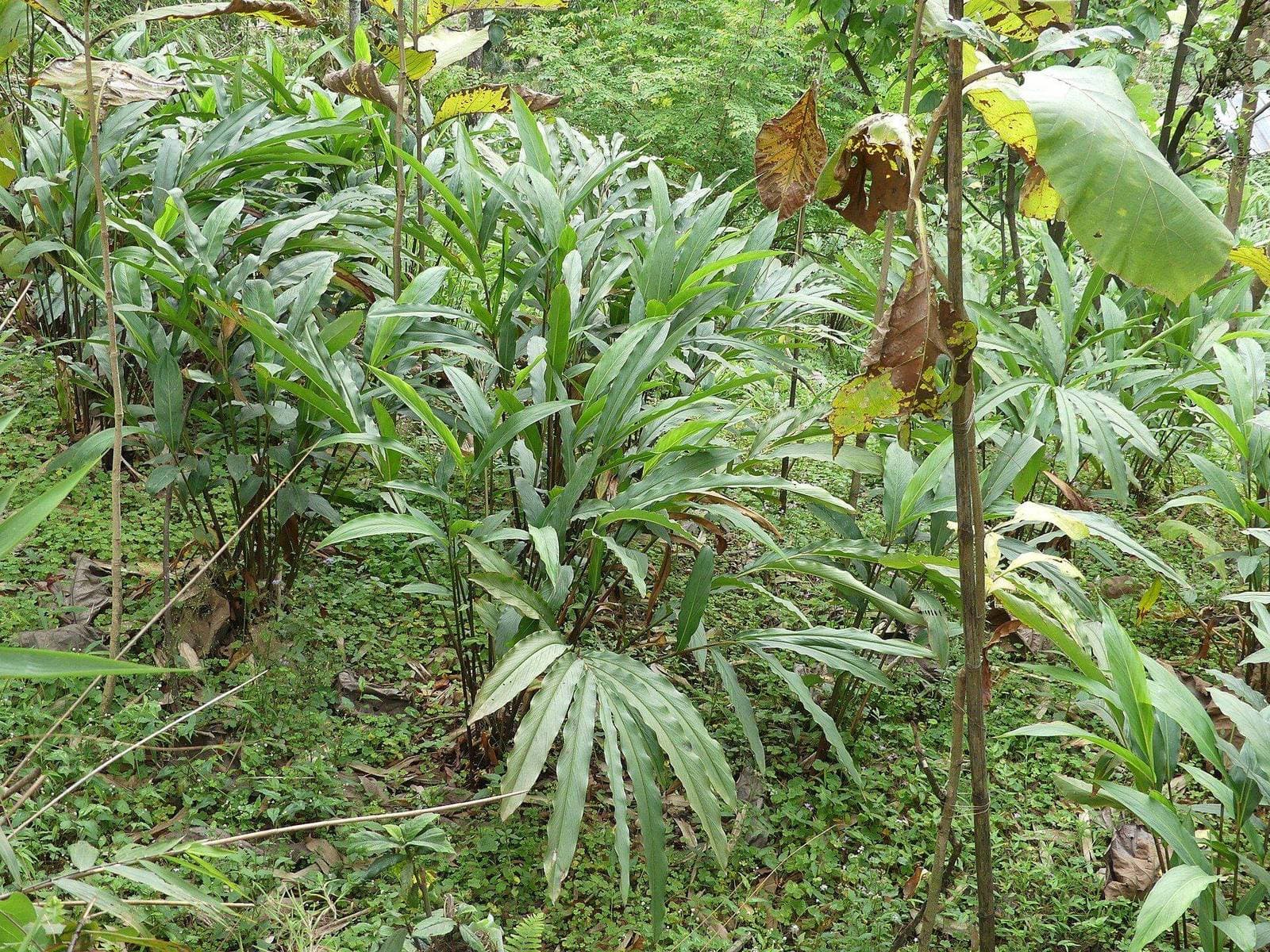
If you buy large cardamom in bulk (for biryani masala, spice blends, or restaurant supply), you have almost certainly compared Nepal, India and Bhutanand been told the Indian badi elaichi is the “original”. Here is the part that rarely reaches the buyer: Nepal, not India, grows the majority of the world’s black cardamom. A large share of the “Indian” crop sold across Pakistan, the Gulf, Bangladesh, and the UK was grown in Nepal’s eastern hills, moved across the border, re-packed, and re-exported. You may already be buying Nepali cardamom, just at a re-export price.
This is not an argument against India. India has a real, respected cardamom industry and genuine growers in Sikkim and the Darjeeling hills, and good Sikkim cardamom is good cardamom. Bhutan grows the same crop on the same slopes. The point here is transparency, not rivalry: once you can see where a crop is actually grown and how it reaches you, you can decide for yourself where the value sits.
Here is the short version, before we get into the details:
| Factor | Nepal | India (Sikkim / Darjeeling) | Bhutan |
|---|---|---|---|
| Global production share | ~52%, the world’s largest producer | ~37%, of which Sikkim is ~84% | ~11% |
| Main growing areas | Taplejung, Panchthar, Ilam, Sankhuwasabha | East and North Sikkim; Darjeeling and Kalimpong hills | Eastern and southern districts |
| Certification | GI tag discussed but not yet finalised | GI-tagged since 2015 | No GI; national organic policy |
| Farming style | Traditional, mixed input | State-wide organic mandate in Sikkim | Largely low-input smallholder |
| Drying method | Wood-fired bhatti kilns; closed-flue on premium lots | Wood-fired bhatti kilns | Wood-fired bhatti kilns |
| Known for | Export volume, grading variety, price | GI provenance, organic certification | Small volumes, mostly regional trade |
In this guide we compare all three origins across cultivation, quality, pricing, and the route each takes to market. For graded, export-ready stock sourced directly from eastern Nepal, see our large cardamom product range.
What Is Large Cardamom?
Large cardamom, sometimes called black cardamom or Himalayan cardamom, is a spice native to the Eastern Himalayas. It belongs to the same botanical family as green cardamom but is a completely different species.
Unlike its smaller green cousin, large cardamom pods are reddish-brown, coarse-skinned, and dried over a wood or smoke fire, which gives it a bold, smoky character.
A few quick facts worth knowing:
- Botanical name: Amomum subulatum
- Also called: Black cardamom, badi elaichi, alaichi (Nepali)
- Flavor profile: Smoky, earthy, slightly camphor-like, with none of the sweetness of green cardamom
- Common uses: Garam masala blends, slow-cooked meats, biryanis, and traditional Himalayan and Ayurvedic remedies
As a high-altitude cardamom crop, it thrives only in a narrow set of mountain conditions. That narrow window is exactly why three countries dominate global supply.
Where black cardamom actually grows
Black cardamom is not a lowland crop. Large cardamom (Amomum subulatum) grows in a narrow band of the eastern Himalayas, roughly 800–2,000 metres above sea level, on cool, shaded, high-rainfall slopes. That belt runs across eastern Nepal, the Indian states of Sikkim and West Bengal (the Darjeeling and Kalimpong hills), and parts of Bhutan. It is a small, specific geography, which is exactly why so few countries grow it at all.
The whole belt shares a very particular environment, and it is the reason all three origins can grow the crop at all:
- Altitude:Roughly 600–2,000 metres above sea level
- Rainfall:Heavy monsoon rainfall, typically 2,000–3,000 mm a year
- Temperature: Cool, humid climate that avoids frost and extreme heat
- Soil: Well-drained, slightly acidic forest soil rich in organic matter
- Shade: Native trees like alder and utis regulate temperature and enrich the soil naturally
Nepal’s cardamom heartland sits in its eastern hill districts: Ilam, Panchthar, Taplejung, and Sankhuwasabha, with Tehrathum, Bhojpur, and Dhankuta adding to the total. Those first four districts alone account for the bulk of national output. The plants grow under forest canopy on terraced hillsides, and the capsules are cured before they ever leave the farm.
Because all three origins share the same slopes and the same species, the crop itself is close to identical across the border. That matters for the whole discussion: the meaningful differences are not botanical. They are about who grows the volume, and how it reaches your warehouse.
What the production numbers show
On volume, the ranking is not really in dispute. Nepal is the world’s largest producer of large cardamom, India is second, and Bhutan third. The exact percentages move year to year with weather and disease, but every serious source keeps the same order.
| Producer | Share of global large cardamom production |
|---|---|
| Nepal | ~52% (world’s largest producer) |
| India | ~37% (Sikkim alone contributes ~84% of India’s output) |
| Bhutan | ~11% |
Those shares are worth reading with a date attached, because they move. Kathmandu Post reporting from June 2026 puts Nepal at roughly 52% across 16,382 hectares, down from the 68% widely quoted a year earlier, as Indian and Bhutanese plantings expand. Nepal remains the largest producer by a wide margin, but anyone modelling supply on a five-year-old percentage is modelling the wrong market.
India’s own production tells the other half of the story. Sikkim was once the leading grower. Its output peaked in the early 2000s, but plantation area and yields have trended down since, hit by ageing plants and viral disease. So India today grows far less large cardamom than its export figures suggest. You can cross-check the country-level picture yourself in FAOSTAT and in trade data on ITC Trade Map.
That gap, India exporting more than it grows, is the whole engine of the re-export trade. The volume has to come from somewhere. In practice, it comes from Nepal.
Nepal large cardamom is overwhelmingly export-driven, with around 90% of the harvest shipped abroad, mostly to India, which then re-exports a portion to Pakistan and the Middle East. India remains the single largest consumer of large cardamom worldwide.
Recent trade data shows just how fast this market is moving. Nepal exported 6,034 tonnes of large cardamom worth Rs. 12.01 billion in the first eleven months of the fiscal year ending mid-June 2026, the highest export value ever recorded, driven by stronger prices rather than exceptional volume.
As a landlocked exporter, though, Nepal still faces real friction. Nepal’s Trade and Export Promotion Centre points to transportation costs and border processes as ongoing constraints, with more than 99% of shipments still routed through India, and traders have separately flagged steep tariffs in markets like Bangladesh, where a 35% customs duty applies despite SAFTA’s 5% preferential rate, as a reason exporters are pushing to diversify beyond India.
Sikkim’s output, by contrast, is absorbed largely within India’s own domestic and export pipeline, supported by its GI recognition and organic branding in premium retail channels. Bhutan’s smaller crop moves mostly through regional trade.
Cultivation compared
Cultivation practices across the belt rely on generations-old, low-input farming, though the details differ in a few important ways.
| Cultivation factor | Nepal | Sikkim |
|---|---|---|
| Popular cultivars | Ramsey, Sawney, Golsey | Ramsey, Sawney, Golsey, Dzongu Golsey, Varlangey |
| Input approach | Traditional, farmer-managed | Certified organic (no synthetic fertilizers or pesticides) |
| Biggest agronomic challenge | Aging plantations, disease pressure | Sharp production decline since 2004, gradual recovery since 2007 |
| Land under cultivation | ~20,000 hectares across 52 districts | Concentrated in agroforestry belts statewide |
Nepal’s cardamom cultivation is concentrated in four eastern districts, which together account for the vast majority of national output:
- Taplejung– the top producer, contributing around 44% of national output
- Sankhuwasabha– the second-largest, at roughly 22%
- Panchthar
- Ilam
Sikkim, meanwhile, has leaned into its organic identity. Farmers there use forest-litter mulching and farmyard manure instead of synthetic inputs, a practice tied closely to Sikkim’s state-wide organic mandate.
All three origins battle similar problems: aging plantations, viral and fungal disease, and yield instability from erratic rainfall. Researchers tracking Sikkim’s cardamom production decline found that output dropped sharply after 2004, with farmers and extension agencies working since 2007 to reverse the trend.
Comparing Quality: Which Origin Is Better?
Quality depends on a handful of measurable traits, not on nationality alone. Here is what buyers typically evaluate:
- Pod size– larger, plumper pods generally indicate a higher grade
- Color– deep reddish-brown to near-black, evenly dried
- Oil content– higher essential oil retention means a stronger aroma
- Moisture level– properly cured pods stay low-moisture, resisting mold and weight loss
- Aroma– a smoky, earthy scent that comes from consistent kiln-curing
Nepal large cardamom is typically graded into categories such as Bold, Ordinary, and Chhote, based on pod size and skin quality. Farmers in Taplejung and Ilam are known for producing consistently large pods with strong oil retention.
Sikkim cardamom, backed by organic certification and GI status, is often marketed on purity and traditional smoke-curing quality, with a notably deep, earthy aroma.
In practice, cardamom from any of the three origins can reach premium grade when farmers control moisture correctly during drying. A recent elevation study on Sikkim’s cultivars even found that yield-related traits shift depending on the exact altitude a plant is grown at, which underscores how much farm-level variables matter. Quality is more about individual farm practice than which side of the border the crop comes from.
How Nepali cardamom becomes “Indian” cardamom
There is nothing secretive about the route. It is simply how the regional trade has organised itself over decades, and it works like this:
- Farmers in eastern Nepal harvest the pods and cure them in Bhatti kilns.
- Traders buy at Nepali collection markets and truck the crop across the border to Indian hubs such as Siliguri.
- There the cardamom is graded, re-packed, and enters the Indian supply chain, frequently as Indian badi elaichi.
- Importers in Karachi, Dubai, Jeddah, Dhaka, and London buy it with an Indian label, an Indian price, and little visibility of where it grew.
The scale is striking. By trade reporting, close to all of Nepal’s cardamom, around 99 percent, is exported to India first, which is why Nepali producers and press have been calling to diversify the export market for years. From India, a large part is re-exported onward, with Pakistan the single biggest destination for that onward trade. So “Indian black cardamom” in a Gulf or South Asian market is, very often, re-exported cardamom that started life on a Nepali hillside.
None of this is an accusation. Middlemen in Siliguri and elsewhere provide real services (aggregation, grading, credit, logistics). The question for a buyer is simply whether those services are worth what they add to the price, or whether the same crop can be sourced closer to where it grew.
What this costs the buyer
For a wholesale buyer, the re-export route has two costs: a money cost and an information cost.
The money cost is price stacking. Every hand the crop passes through (village collector, cross-border trader, hub grader and re-packer, exporter) adds a margin. None of those steps improves the cardamom; they move and re-label it. By the time the lot reaches an importer as an Indian brand, the landed price can sit well above the origin price for the very same pods. We keep origin pricing transparent in our guide to black cardamom price per kg, farmgate through CIF.
The information cost is quieter but just as expensive. Once a lot has been aggregated and re-packed, you lose the harvest district, the drying method, and often lot-to-lot consistency: two “same grade” sacks can behave differently in a blend. For anyone running a food-safety audit, a halal certification file, or a consistent house masala, that lost traceability is a real operational risk, not a detail.
Large Cardamom Price by Origin
Large cardamom prices are rarely fixed. Price moves with a mix of factors that buyers should track rather than a single “market rate”:
- Harvest volume and how well the monsoon performed that season
- Pod grade: Bold pods consistently fetch more than Ordinary or Chhote grades
- Currency movement, since the Nepali rupee is pegged to the Indian rupee
- Demand from key buyers, including India, Pakistan, Bangladesh, and the Middle East
- Available stock in producing countries at any given time
Since almost all Nepal large cardamom flows through Indian markets, Nepali farm-gate prices track Indian demand closely. When Indian stock runs low, prices for Nepali cardamom can rise sharply within weeks.
Sikkim cardamom pricing follows a similar seasonal curve but is additionally shaped by its GI-certified, organic status, which can support a premium in specialty and export markets. Either way, grade matters more than origin: bold, well-dried, low-moisture pods consistently command higher prices regardless of country.
Does origin change the product?
Not by species: all three origins grow the same Amomum subulatum in the same conditions. What genuinely changes flavour is curing, and this is where Nepali cardamom has a real, tastable signature.
Fresh capsules hold far too much moisture to store or ship, so they are dried soon after harvest. In eastern Nepal that is done in traditional Bhatti kilns, wood-fired chambers where warm smoke passes over the pods for many hours. That slow smoke-cure does three things:
- Signature smoky depth. The campfire note that black cardamom brings to biryani, nihari, and pulao comes from this smoke contact.
- Preserved essential oils. Gradual drying protects the volatile oils that carry aroma into a slow-cooked pot; higher oil content means a pod that works harder per kilo.
- Shelf-stable capsules. Properly cured pods store and ship without losing potency.
Grade terminology is shared across the belt: export lots are sorted Bold, Medium, and Fine by pod size. Bold and Medium suit buyers who want whole pods visible in the dish; Fine is the value choice for mills and blenders, since size stops mattering once the pod is ground. Smoke level is itself a specification: heavier smoke means a bolder aroma and more surface residue, so a serious supplier will tell you exactly how each lot was dried and let you choose the profile your market wants. We compare the two curing routes in Bhatti-dried vs machine-dried black cardamom.
| Attribute | Nepal | India (Sikkim / Darjeeling) | Bhutan |
|---|---|---|---|
| Growing regions | Ilam, Panchthar, Taplejung, Sankhuwasabha | Sikkim, Darjeeling and Kalimpong hills | Eastern and southern districts |
| Altitude & species | Amomum subulatum, ~800–2,000m Himalayan belt | Same species, same belt | Same species, same belt |
| Share of world production | ~52%, the largest | ~37%; Sikkim output down from its early-2000s peak | ~11% |
| Drying method | Traditional Bhatti smoke-kilns; flue drying on premium lots | Similar kiln drying | Similar kiln drying |
| Typical route to market | Often trucked to Indian hubs, re-packed, and re-exported under an Indian label | Exports include substantial Nepali-grown, re-exported crop | Largely regional trade |
| Buying at origin | Farm-to-port traceability, fewer margin layers | Extra intermediaries for the same Himalayan crop | Limited export infrastructure |
Which One Should You Choose?
The right choice depends on what you actually need from the crop.
| Buyer type | Better fit | Why |
|---|---|---|
| Exporters & bulk traders | Nepal | Higher production volume, established export infrastructure, competitive per-kg pricing |
| Organic/GI-focused buyers | Sikkim | GI certification, state-wide organic mandate, documented traceability |
| Buyers who need traceability to a district | Nepal, bought at origin | A Nepali certificate of origin and a named harvest district, rather than a re-packed lot of unknown provenance |
| Home cooks & small retailers | Any | Flavor differences are minor; curing quality matters more than origin |
| Wellness and food brands | Any | Same active compounds regardless of origin; verify moisture and purity testing |
If volume and price competitiveness matter most, Nepal is usually the practical choice. If certified organic sourcing with GI provenance is the priority, Sikkim has the edge.
What to ask your current supplier
You do not need to take anyone’s word, including ours, on origin. Five documents and questions settle it, and any legitimate exporter can answer all five:
- Certificate of origin. Which country actually grew and shipped the crop? A Nepali certificate of origin says so on paper.
- Phytosanitary certificate. The plant-health clearance your customs authority needs on import, and confirmation the lot was inspected.
- District of harvest. Ilam, Taplejung, Sankhuwasabha, Panchthar? A specific answer signals a short supply chain; a vague one signals a re-packed lot.
- Drying method. Bhatti smoke-kiln, closed flue, or a mix, and how heavy the smoke profile is. This drives both flavour and EU compliance.
- Grade and lab report. Bold, Medium, or Fine, with moisture content (aim below 9%) confirmed per lot rather than by verbal assurance.
If a supplier can produce those cleanly, you know what you are buying. If they cannot name the district or the drying method, the crop has likely travelled the re-export route, and the price reflects it.
Health Benefits of Large Cardamom
Beyond flavor, large cardamom benefits go back centuries in Ayurvedic and traditional Himalayan medicine. Some of the most commonly cited ones include:
- Digestive support: stimulates digestive enzymes and may ease bloating and discomfort
- Antioxidant activity: compounds like limonene and linalool help the body manage oxidative stress
- Blood pressure support: research summarized by Healthline links regular cardamom intake to modest improvements in blood pressure in small clinical studies
- Oral freshness: traditionally chewed after meals to freshen breath
These benefits apply to large cardamom from any well-grown source, since the active compounds are tied to the plant species itself rather than its country of origin.
Frequently Asked Questions
Which country produces the most large cardamom?
Nepal. It accounts for roughly 52% of global large cardamom production, ahead of India at about 37% and Bhutan at about 11%. Nepal's share has been easing as Indian and Bhutanese plantings expand — it was widely quoted at 68% a year earlier — but it remains the largest producer by a clear margin.
Is Nepali black cardamom the same species as Indian or Bhutanese?
Yes. All three are Amomum subulatum (large cardamom, or badi elaichi), grown in the same eastern Himalayan belt that straddles the borders. The plant does not recognise the border, and neither does a lab. Judge any lot on pod size, aroma, moisture, and oil content rather than on the country printed on the sack.
Does Sikkim produce better large cardamom than Nepal?
Neither is objectively better. Sikkim large cardamom benefits from GI certification and organic farming status, while Nepal offers larger volume and more grading variety. Quality ultimately depends on individual farm and drying practices, not on which side of the border a plant grew.
Why is buying direct from Nepal cheaper than the same cardamom via India?
The price difference is about the route, not the quality. When a lot travels from a Nepali farm through a border hub to be re-graded, re-packed, and re-exported, each intermediary adds a margin. Buying at origin removes those layers, so you pay for the crop and the logistics, not for the detour.
Why do large cardamom prices change frequently?
Large cardamom price shifts with harvest size, monsoon performance, currency movements, and demand from major importing markets like India and Pakistan. Low-stock years typically push prices higher within a single season.
Where is large cardamom mainly grown?
Almost exclusively across the Eastern Himalayas: eastern Nepal, the Indian state of Sikkim and parts of Darjeeling and Kalimpong in West Bengal, and parts of Bhutan. That stretch is commonly called the cardamom belt of the world.
What documentation should ship with an order?
A certificate of origin, a phytosanitary certificate, a commercial invoice and packing list, and a per-lot lab report covering moisture and grade. Halal certification paperwork is provided on request. These are the documents an importer needs for clean customs clearance and traceability — and the certificate of origin is what tells you which country actually grew the crop.
What makes Himalayan large cardamom unique?
It grows only in specific high-altitude, shaded, high-rainfall conditions found in this region. That narrow ecological niche, combined with traditional smoke-curing over wood-fired bhatti kilns, gives it a flavour profile unmatched by cardamom grown elsewhere.
The bottom line: same Himalayas, different invoice
So, who actually grows the better large cardamom crop? The honest answer is that it depends on what you value most. All three origins share the same Eastern Himalayan soil, climate, and centuries of farming knowledge that make large cardamom cultivation possible in the first place.
Nepal leads in volume, export reach, and price competitiveness. Sikkim leads in organic certification and GI-backed traditional processing. What differs most is the route to your warehouse and the number of hands on the invoice before it reaches you.
For most buyers in Pakistan, the Gulf, Bangladesh, and the UK, that means sourcing at origin, and, increasingly, from Nepal, where the crop is grown, cured, and graded before it ships.