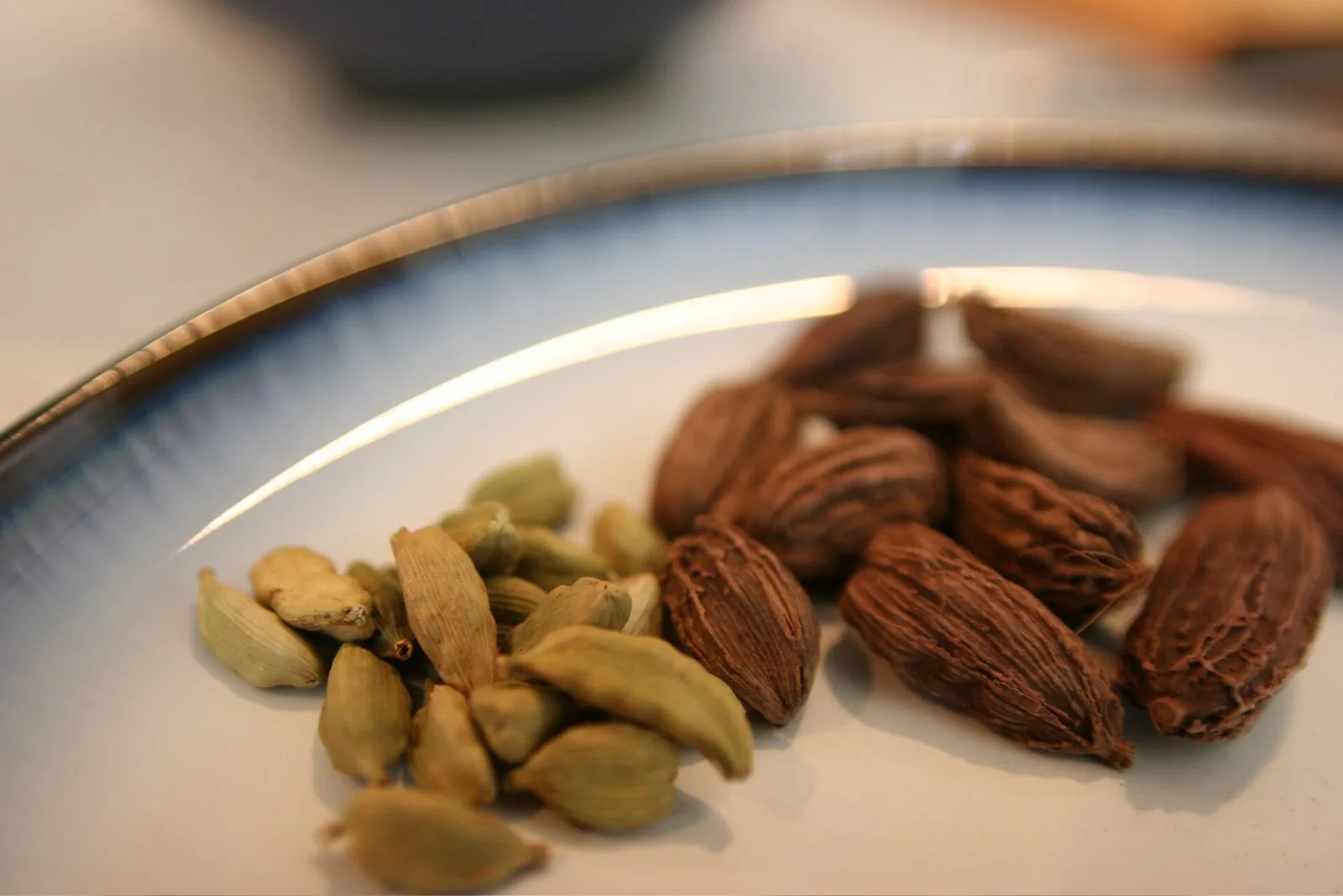
In homes across Pakistan, the Gulf, Bangladesh, and the UK, badi elaichi earns its shelf space twice over, once for flavour, and once for tradition. The black cardamom benefitsthat generations of cooks have trusted (settling the stomach after a heavy meal, warming the body in winter, freshening the breath) are the same reasons this smoky Himalayan pod belongs in everyday cooking, not just festival biryani. Here is what tradition actually says, how to use the spice daily, and why the pod's origin decides how much of that character reaches your kitchen.
Black cardamom benefits: what tradition and the kitchen agree on
A note on honesty first, because serious buyers deserve it: black cardamom is a culinary spice, not a medicine. What follows are the traditional and kitchen uses that South Asian households have relied on for centuries (the reason demand for badi elaichi stays strong from Lahore to London), not clinical claims.
A traditional companion to heavy meals
The oldest and most enduring use is digestive. Across Ayurvedic and Unani kitchen traditions, black cardamom for digestion is almost reflexive: a pod simmered into dal or rice, or seeds chewed after a rich dinner, to leave the stomach feeling settled. It is the same logic behind the after-dinner spice trays still offered in homes and restaurants across the subcontinent.
A warming spice for the cold months
In the hill villages of eastern Nepal where the crop grows, badi elaichi is a winter staple. Families drop a cracked pod into hot tea or broth during the cold season, the smoky, camphor-like warmth is exactly what a foggy morning in Karachi, Dhaka, or Bradford calls for. This warming reputation travels with the spice wherever South Asian communities settle.
Fresh breath, the traditional way
Long before mints, there were cardamom seeds. Chewing one or two seeds after meals to freshen the mouth is a habit as old as the spice trade itself, and the bold aroma of black cardamom makes it particularly suited to the role. Many of our retail-brand buyers package small pods precisely for this traditional use.
Everyday black cardamom uses: tea, curries, and spice blends
The best spice is the one that gets used daily. These three formats cover most black cardamom uses in home and restaurant kitchens, and all three are simple.
Black cardamom tea
Lightly crack one pod and simmer it with your regular tea leaves for two to three minutes, with milk in the Pakistani and Indian style, or without, as a plain tisane with a little honey. One pod flavours two cups. The smoky depth is bolder than green cardamom chai, and it has made black cardamom tea a fixture of winter menus at cafés serving South Asian communities in the UK and the Gulf. Pod counts, steep times and the husk-versus-seed problem are covered in our guide to brewing black cardamom tea.
Whole pods in curries, dal, and rice
Add one or two whole pods to hot oil at the start of any curry, nihari, haleem, or pot of dal, the long simmer draws the oils out gently. For rice, one pod per two cups turns plain pulao aromatic. Remove the pods before serving, or leave them in as the visible mark of a properly made dish.
Ground seeds in masala blends
Spice brands and serious home blenders grind the seeds into garam masala, chai masala, and biryani mixes, where badi elaichi supplies the deep base note the blend is built on. If biryani is your main use, our guide to black cardamom for biryani covers pod counts and timing in detail.
Why origin and curing decide aroma and potency
Every traditional use above depends on one thing: the essential oils inside the seeds. Those oils are the pod's aroma, its flavour, and its value. And by the time a pod reaches your kitchen, two factors have already decided how much oil is left, where it grew, and how it was dried.
Altitude matters first. Black cardamom grown slowly on the cool, misty hillsides of Ilam, Taplejung, Sankhuwasabha, and Panchthar in eastern Nepal develops larger, oil-rich pods than crops from lower, hotter regions. This is the terroir behind Nepal's position as the world's largest producer of the spice.
Curing matters even more. Nepali farmers dry the harvest in traditional Bhatti ovens, wood-fired chambers where warm smoke passes slowly over the pods for hours. The slow cure locks in the volatile oils and adds the signature smoky note, and the pods hold their potency for 12–24 months. Sun-dried commodity lots lose oils to UV and uneven heat, and fade within months. A stale pod gives you neither the flavour nor the traditional character you bought it for.
How to choose and store black cardamom at home
Everything above depends on the oils still being in the pod, and a jar from the supermarket shelf gives you no date and no clue how it was dried. A few checks in your own kitchen tell you whether a pod is worth cooking with:
- Look at the husk. Black cardamom is dark brown to near black, ribbed and tapered. Smooth, round pods are not black cardamom at all, and a much larger, deeply furrowed pod shaped like a nutmeg is tsaoko, a different spice covered in our guide to black cardamom versus tsaoko.
- Crack one open. A fresh pod releases a sharp hit of camphor and woodsmoke straight away, and the seeds inside are dark and slightly sticky. A faint aroma means most of the oils have gone.
- Buy whole, not ground. Whole pods keep their oils sealed in the husk; grind or crack them only when you cook.
- Store them cool, dry and whole. Kept that way, smoke-dried pods hold their aroma for 12 to 24 months. Sun-dried pods fade within months, so a jar that smells of very little has probably reached the end of its life.
Frequently asked questions
What are the benefits of black cardamom?
In South Asian food traditions, black cardamom is valued three ways: as a companion to heavy meals, as a warming spice in winter tea and broth, and as a breath freshener when the seeds are chewed after eating. These are culinary traditions rather than medical claims. In the kitchen, its real benefit is the deep, smoky base note it gives curries, dal, rice and tea.
Is black cardamom the same as badi elaichi?
Yes. Badi elaichi, meaning big cardamom, is the Hindi and Urdu name for black cardamom, Amomum subulatum, which is also sold as large cardamom or kali elaichi. It is a different plant from green cardamom (choti elaichi) and from tsaoko, the Chinese pod also sold as black cardamom.
How much black cardamom should I use?
Less than you might think, because it is strong. Use one or two whole pods in a curry or a pot of dal, one pod per two cups of rice, and 2 to 3 pods per kilogram of rice in a biryani. Add them early, in hot oil, so the long cook can draw the oils out.
Can you drink black cardamom in tea?
Yes. Lightly crack one pod and simmer it with your tea leaves for two to three minutes, with milk or as a plain tisane with a little honey. One pod flavours two cups. It tastes smoky rather than sweet, so it is not a straight swap for green cardamom in chai.
How long does black cardamom keep?
Stored whole in an airtight jar in a cool, dry place, smoke-dried pods hold their aroma for 12 to 24 months. Sun-dried pods and ground black cardamom fade within months, so buy whole pods and crack or grind them only when you cook.
The takeaway: everyday goodness starts with a potent pod
The black cardamom benefits that tradition celebrates (a settled stomach, a warming cup, fresh breath after a good meal) all travel inside the pod's essential oils. Protect the oils and you keep the benefits: choose smoked, Bhatti-cured badi elaichi from eastern Nepal, store it whole, and make it a daily habit in your tea, dal, and rice rather than a festival-only spice.