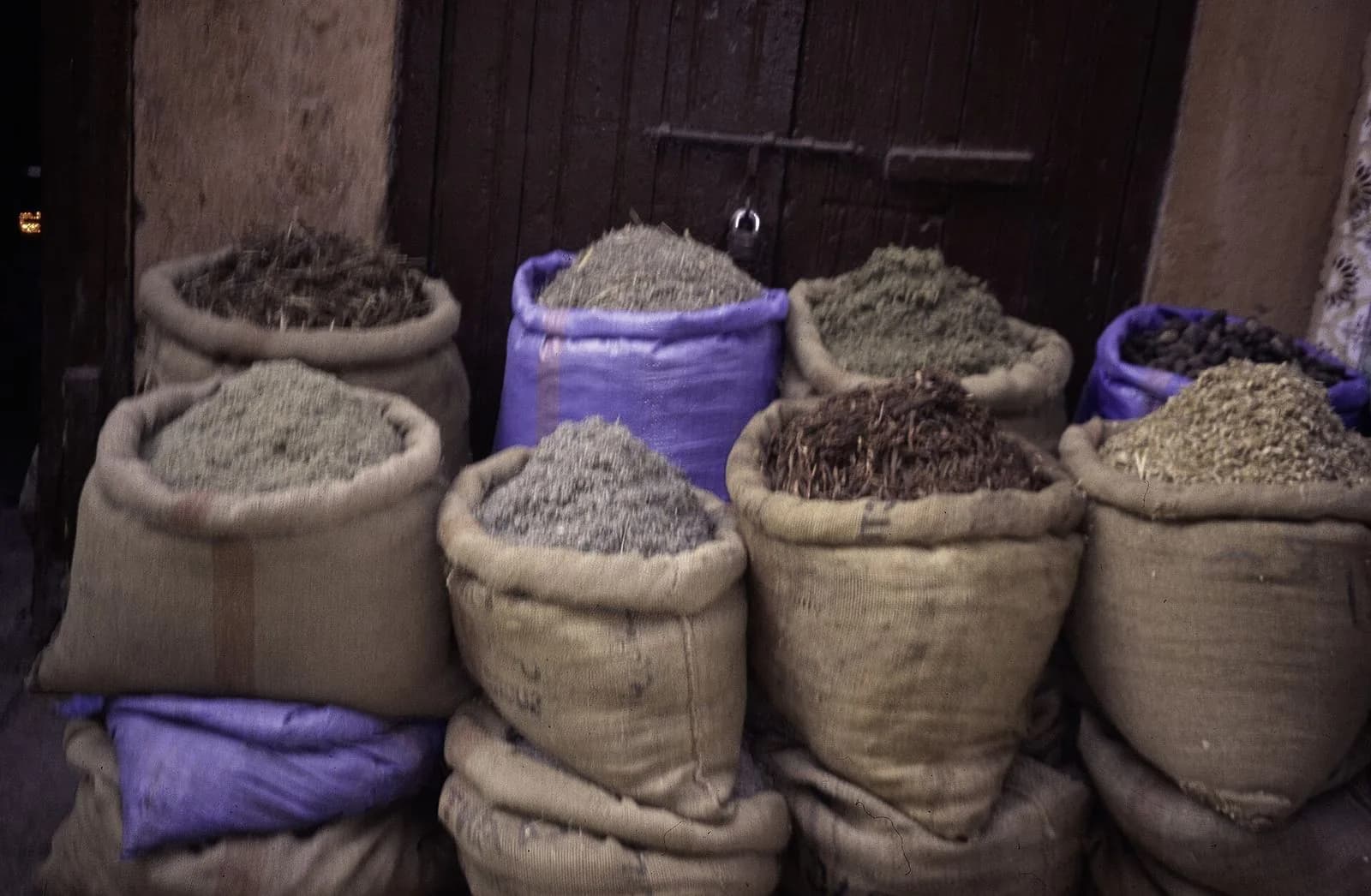
The UAE is the largest single destination for Nepali black cardamom, and Dubai is the re-export hub that moves it onward across the Gulf. The trade lane is well worn, but it is also unforgiving of paperwork errors. This is the sequence we walk every new UAE buyer through, in the order it actually happens.
Step 1: Get the HS code right
Everything downstream (duty rate, inspection profile, whether your consignment is flagged) follows from the Harmonised System code you declare. Cardamom sits in Chapter 09 (coffee, tea, maté and spices), under heading 0908:
| HS code | Covers | Applies to |
|---|---|---|
| 0908.31 | Cardamoms, neither crushed nor ground | Whole black cardamom pods (Bold, Medium, and Fine grades) |
| 0908.32 | Cardamoms, crushed or ground | Milled black cardamom powder, private-label ground packs |
The authoritative reference is the WCO Harmonised System nomenclature. If you are importing both whole pods and ground powder in the same consignment, they are separate line items with separate codes. Do not let a freight forwarder collapse them into one to save a line on the declaration. That is the kind of shortcut that turns into a penalty.
Step 2: Register as a food importer
This is the step that catches first-time importers, because it happens long before the goods move, and if you skip it, you find out when your cargo is sitting at DXB accruing storage charges.
To import food into the UAE you need, in order:
- A UAE trade licence covering foodstuff trading. Issued by the Department of Economic Development in your emirate, or by your free zone authority. A general trading licence usually covers it; a services licence does not.
- Registration with the food-safety authority. Federal policy sits with the Ministry of Climate Change and Environment (MOCCAE), while day-to-day food import control is administered at emirate level, for Dubai, through Dubai Municipality and its food import and re-export system.
- Product and label registration. Each SKU is registered, and its label approved, before it can clear. For spices this means product name, botanical name, net weight, country of origin, batch/lot number, production and expiry dates, and importer details, in Arabic and English. Gulf labelling requirements are set out by the GCC Standardization Organization (GSO).
Get the label artwork approved before production, not after. A rejected label on 500kg of already-packed private-label pouches means repacking in a bonded warehouse at your expense. If you are running a private-label programme with us, we build the label to your approved artwork. See private label options.
Step 3: The seven documents
Here is the document pack for a black cardamom consignment entering the UAE. Six of the seven are the exporter's responsibility. When you evaluate a supplier, this table is a useful test of whether they have actually done this before.
| Document | Issued by | Why customs wants it |
|---|---|---|
| Commercial invoice | Exporter | Establishes the customs value that duty is charged on. |
| Packing list | Exporter | Sack count, net and gross weights, lot numbers. |
| Certificate of origin | Chamber of commerce (FNCCI, Nepal) | Proves Nepali origin. Required for preferential treatment and for any provenance claim you make downstream. |
| Phytosanitary certificate | Nepal plant protection authority | Certifies the consignment is pest-free, under the IPPC framework. No phytosanitary, no entry. |
| Health / free-sale certificate | Nepal competent authority | Confirms the product is fit for human consumption. |
| Lab analysis report | Accredited ISO lab, per lot | Aflatoxin, moisture, pesticide residues, PAHs. See the thresholds below. |
| Air waybill / bill of lading | Carrier | Title to the goods and proof of shipment. |
The seventh piece, your import permit and food registration, is the one that's yours. Everything on our side of that list ships with every consignment as standard; the full pack is described on our compliance page.
Step 4: Lab thresholds that matter
Gulf food-safety regulators draw heavily on Codex Alimentarius standards, and many importers who also serve EU customers simply test to the stricter European limits so that one lot satisfies both markets. That is the approach we take:
| Test | Our spec | Why it matters |
|---|---|---|
| Aflatoxin B1 | < 5 ppb | Carcinogenic mould toxin from poor drying or storage. The single most common cause of spice rejections worldwide. |
| Moisture | < 9% | Above ~10–12%, mould growth becomes likely in transit. It is also where dishonest suppliers pad weight. |
| PAHs | Zero (closed-flue electric drying) | Deposited by traditional wood-fire drying. Regulated in the EU and UK; increasingly scrutinised in the Gulf. |
| Pesticide residues | Below EU and UAE MRLs | Limits are published in the EU Pesticides Database. |
Step 5: Duty, VAT, and what it costs
The UAE applies the GCC common external tariff, generally 5% on the CIF value for foodstuffs, plus 5% VAT, recoverable if you are VAT registered, though you still need the cash at clearance. Rates and exemptions do change, so confirm the current position for HS 0908.31 with your broker or the UAE Federal Customs Authority before you build your margin model.
For a full worked example (500kg of Bold grade from FOB Kathmandu all the way to a landed per-kg cost in Dubai, with every freight, documentation, and clearance line itemised), see our companion piece on black cardamom price per kg. The short version: a USD 18/kg FOB price lands at about USD 22.70/kg.
What a KTM–DXB shipment actually looks like
Nepal is landlocked, so black cardamom moves by air out of Tribhuvan International (KTM), or overland to an Indian port and then by sea. Air is the norm for this product: the value density justifies it, and it keeps the pods out of a hot, humid container for six weeks.
- Days 1–3: lot selection and testing. The lot is drawn, graded, and sampled. Samples go to the ISO lab.
- Days 4–9: lab results and documentation. Aflatoxin, moisture, PAH and residue results come back. In parallel we file for the phytosanitary certificate and the certificate of origin.
- Day 10: packing and sealing. Pods are packed into 25kg food-grade jute sacks, lot-marked, and sealed.
- Days 11–12: customs and departure. Export clearance at KTM, air waybill issued, scanned documents sent to you before wheels-up.
- Days 13–17: arrival and clearance at DXB. Your broker files the declaration. With registration and labels already approved, release typically follows within 24–72 hours.
Sea freight via Kolkata or Haldia is cheaper per kilo and worth modelling above roughly 5 tonnes, but adds 4–6 weeks and real moisture risk. We only recommend it for buyers who can accept both. The trade-offs by destination are set out on our UAE export page.
Five reasons consignments get rejected
Every one of these is avoidable, and every one of them we have seen happen to a buyer who moved to us afterwards:
- Aflatoxin above limit.The classic. Poorly dried pods, stored through a monsoon. Consignment destroyed, at the importer's cost.
- Label not pre-approved. Goods arrive, label fails review, cargo sits in storage while you repack. Entirely preventable by registering before shipment.
- Mismatched documents.The weight on the invoice doesn't match the packing list; the lot number on the lab report doesn't match the sacks. Customs reads these documents against each other, and so should you, before departure.
- Expired phytosanitary certificate. These have a validity window. A shipment delayed at origin can outlive its own paperwork.
- Wrong HS code. See step one.
If you want a sense of how routinely this happens across the industry, the EU's RASFF portal publishes every border rejection in Europe. Filter for cardamom. It is a sobering afternoon.
Frequently asked questions
What is the HS code for black cardamom?
Whole black cardamom pods (Amomum subulatum) are classified under HS heading 0908.31 (cardamoms, neither crushed nor ground). Crushed or ground cardamom falls under 0908.32. The UAE applies its national tariff extension to these, commonly written as 0908.31.00. Getting this right matters: a misclassification can trigger reassessment, penalties, and a delayed release.
Do I need a licence to import spices into Dubai?
Yes. You need a valid UAE trade licence covering foodstuff trading, registration with the relevant food-safety authority for your emirate (Dubai Municipality's food import system for Dubai), and your product label approved before the consignment clears. The importer of record must be a UAE-registered entity. A foreign exporter cannot clear goods into the UAE on their own account.
How long does it take to import black cardamom from Nepal to the UAE?
Air freight from Kathmandu to Dubai moves in 3–5 days door to door once documentation is in order, with customs release typically 24–72 hours after arrival if your food registration and labels are already approved. The paperwork ahead of departure (phytosanitary certificate, certificate of origin, and lab testing) is usually the longer pole, at roughly 7–10 days.
What is the import duty on cardamom in the UAE?
Most food commodities entering the UAE attract the GCC common external tariff of 5% calculated on the CIF value, plus 5% UAE VAT which is recoverable for VAT-registered businesses. Some foodstuffs are exempted or zero-rated, so confirm the current position for HS 0908.31 with your customs broker before you budget.