Glossary
The words this trade actually uses.
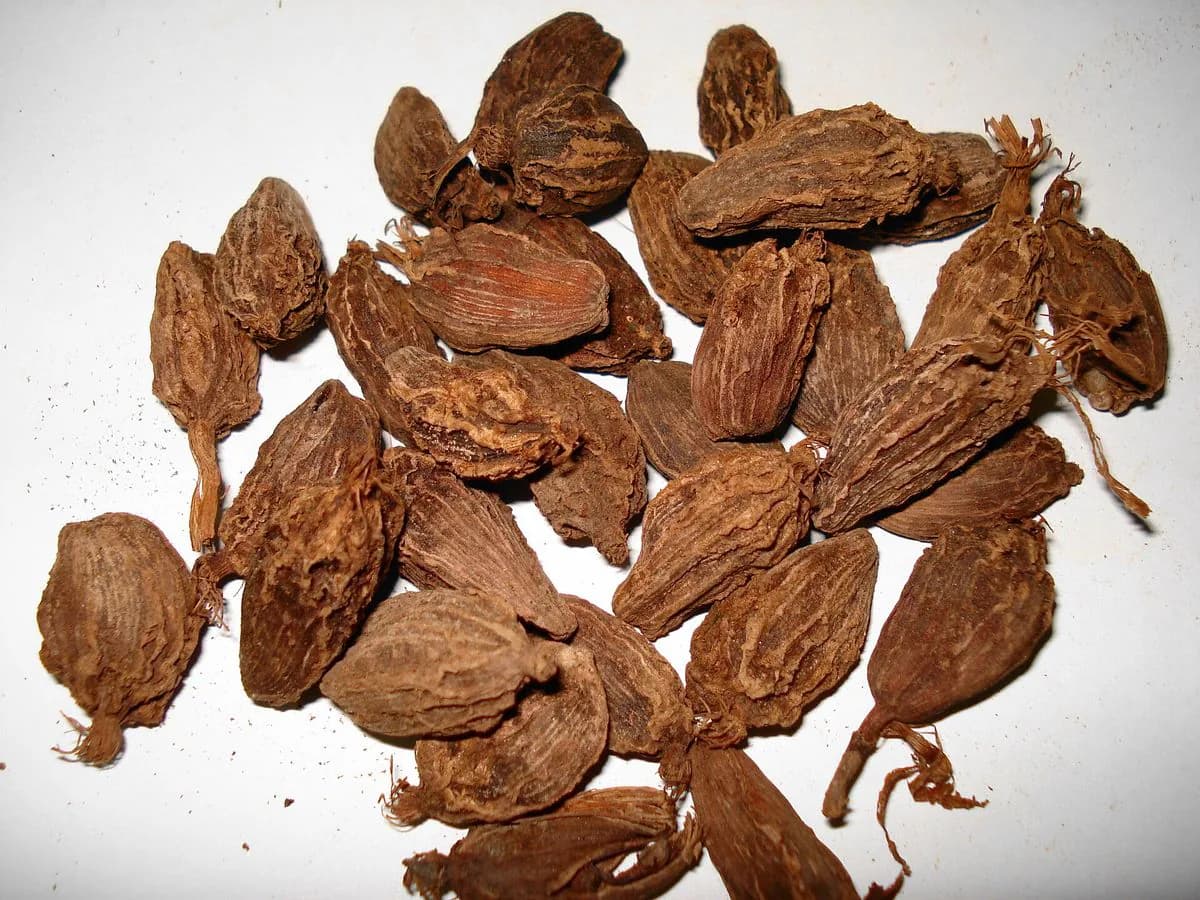
The same pod is badi elaichi, kali elaichi, alaichi, large cardamom or black cardamom depending on who is selling it. Here is what each term means, and which ones are the same thing.
Names for the crop
- Black cardamomalso: Large cardamom, Amomum subulatum
- The smoky, camphor-rich cardamom of the eastern Himalayas. A different species from green cardamom, not a darker grade of it: larger pods, coarse ribbed husk, and a savoury profile with none of green cardamom's sweetness. Used whole in biryani, pulao, nihari, kabsa and garam masala. Black vs green cardamom compared →
- Badi elaichialso: Bari elaichi
- Hindi and Urdu for "big cardamom", the standard trade name across South Asia and the Gulf. If your supplier quotes badi elaichi and you are buying black cardamom, you are talking about the same pod.
- Kali elaichi
- Literally "black cardamom" in Hindi and Urdu. Used interchangeably with badi elaichi, though kali elaichi emphasises the colour and badi elaichi the size.
- Alaichialso: Alainchi
- The Nepali name. Unqualified, alaichi in Nepal usually means the large black cardamom grown in the eastern hills — the crop this country leads the world in — rather than green cardamom.
- Tsaokoalso: Cao guo, Amomum tsao-ko
- A different species again, grown mainly in Yunnan, northern Vietnam and Laos, and often sold as "black cardamom" into Chinese and Southeast Asian cooking. Larger and rounder than Amomum subulatum with a distinct profile. Worth checking which species a quote refers to before comparing prices.
Grades and sorting
- Boldalso: Badadana, Jumbo
- The largest export grade, 22–28 mm. Commands a size premium because the pod is visible whole in the finished dish, which is why Gulf retail and restaurant buyers specify it. That premium disappears the moment the pod is milled. See our bold-grade products →
- Badadana
- South Asian trade term for large-grade pods, broadly equivalent to Bold. Literally "big grain".
- Chotadanaalso: Chhote
- Small-grade pods, broadly equivalent to Fine. Literally "small grain". The value grade for mills and blenders, since pod size stops mattering once the cardamom is ground.
- Tail-clipping
- Trimming the dried stalk from the pod after curing. Removes weight the buyer would otherwise pay for as cardamom, improves the appearance of a retail pack, and reduces the fibrous material that ends up in a grind. Done before packing rather than at destination.
- Mooch-cut
- A close tail-clip that leaves only a short stub of stalk — mooch meaning moustache. A cosmetic specification a buyer can request; it costs labour and yields a cleaner-looking pod.
Curing
- Bhatti
- The traditional wood-fired drying kiln of eastern Nepal. Pods sit on racks above the fire and hot gases pass directly over them, so the crop absorbs smoke as it dries. This is where black cardamom's signature campfire note comes from. Moisture typically finishes up to 12%. Bhatti-dried vs machine-dried cardamom →
- Flue-driedalso: Closed-flue, Improved bhatti, Machine-dried
- Indirect drying, where heat reaches the pods through flue pipes rather than as smoke. Retains more colour and volatile oil, gives moisture below 9% and a non-detect PAH result, and produces a cleaner analytical certificate. Not a premium tier — a different specification of the same crop. Flue-dried vs Bhatti-dried compared →
- Eucalyptolalso: Cineole
- The dominant volatile compound in black cardamom, responsible for its camphor-like top note. Concentration varies with altitude and is preserved or driven off depending on how gently the crop is cured, which is why drying method changes aroma as much as origin does.
Compliance
- Aflatoxin
- A group of toxins produced by Aspergillus moulds, which grow on inadequately dried crops. The single most common reason a spice consignment is rejected at a border. EU and GCC rules set maximum levels for aflatoxin B1 and total aflatoxins in spices; controlling moisture at curing is what keeps a lot under them. How we test every lot for aflatoxin →
- PAHalso: Polycyclic aromatic hydrocarbons
- Compounds formed when food is in contact with smoke. Relevant to Bhatti-cured cardamom by definition. EU Regulation 2023/915 sets maximum PAH levels for certain dried spices, and cardamom is not among the entries covered — so smoke-cured lots are not barred on PAH grounds. The honest claim is that PAH is measured and disclosed per lot, not that it is absent. PAH rules for exporting to the EU →
- Phytosanitary certificate
- A plant-health certificate issued by the exporting country's plant protection authority — in Nepal, the Department of Agriculture — confirming the consignment was inspected and is free from regulated pests. Required by essentially every destination for a plant product.
- Certificate of originalso: COO, FNCCI COO
- The document naming the country where goods were produced, issued in Nepal by the Federation of Nepalese Chambers of Commerce and Industry. It is the difference between cardamom sold as Nepali and the same cardamom re-exported under another country's paperwork, and it is what a preferential duty claim rests on.
- MRLalso: Maximum residue limit
- The highest concentration of a pesticide residue legally permitted in a food. Set per market, so a lot compliant in one destination is not automatically compliant in another. Tested per lot and reported alongside aflatoxin and moisture.
- FSVPalso: Foreign Supplier Verification Program
- US rule making the importer responsible for verifying that their foreign supplier produces food to US standards. It shifts documentation from a courtesy to a legal requirement the importer must hold, which is why per-lot reports matter more in the US market than almost anywhere else. FSVP and exporting to the USA →
Trade and logistics
- HS code 0908.31
- The Harmonized System line for large cardamom (Amomum subulatum), neither crushed nor ground. Ground powder moves under 0908.32 instead, so a shipment classified on the wrong line is a clearance delay waiting to happen.
- Incoterms
- Standard trade terms defining where the seller's responsibility ends and the buyer's begins. FOB puts the goods on the vessel at origin; CIF adds freight and insurance to the destination port; DDP delivers duty paid. Two quotes are only comparable on the same Incoterm. Black cardamom prices by Incoterm →
- MOQalso: Minimum order quantity
- The smallest quantity a supplier will ship. Ours is one sealed 25kg jute sack for a trial, 500kg for wholesale pricing.
- Re-export
- Buying a crop in one country and selling it onward from another, usually after re-grading and re-packing. Around 99% of Nepal's cardamom exports go to India first, where much of it is re-exported under Indian documentation. Each step adds a margin without improving the cardamom. How re-export shapes Nepal, India and Bhutan cardamom →
- Farm gate
- The price paid to the grower at the point of collection, before transport, grading, drying or export costs. The gap between farm gate and landed cost is where the entire argument about re-export margin lives. Black cardamom prices from farm gate to landed cost →
A term missing that you would expect to find? Tell us and we will add it.