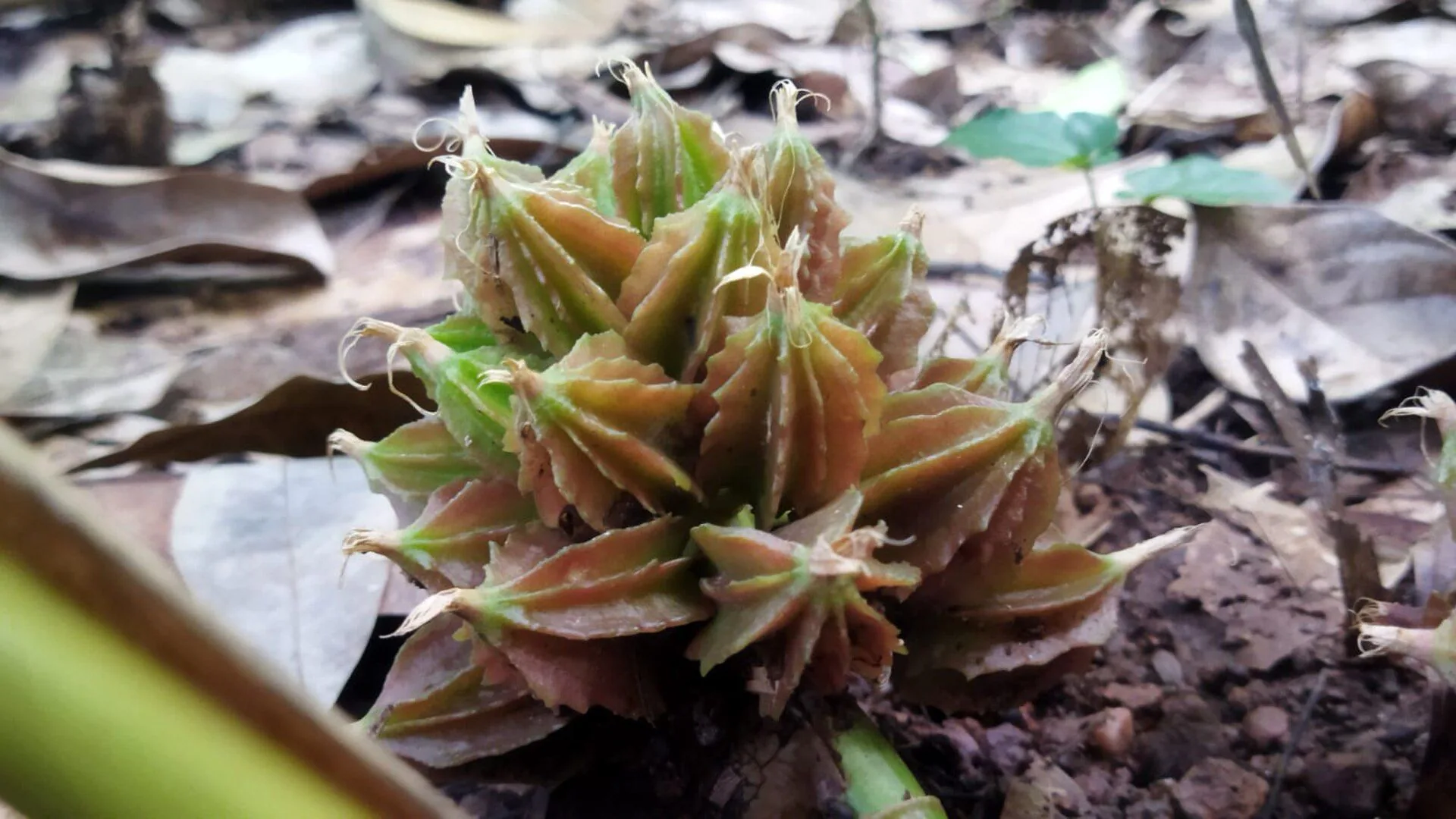
Two unrelated plants are sold in English under a single name: black cardamom. One is Amomum subulatum, grown across the eastern Himalayas and used in biryani and garam masala. The other is Lanxangia tsaoko, grown in Yunnan and northern Vietnam, and it is the pod that goes into phở.
The verdict first, because for most readers it is the only part that matters. If you are making phở, Lanzhou beef noodle soup, Sichuan hot pot or a Chinese red braise, you want tsaoko. We do not sell tsaoko, we do not stock it, and we cannot source it for you.
We grow the other one. Arun Valley Exports is a black cardamom grower and exporter in Sankhuwasabha, eastern Nepal, and Amomum subulatum is the only cardamom we handle. We are writing about both species anyway, because the naming collision sends buyers to the wrong supplier every week, and because our full guide to black cardamom is incomplete without it.
Two plants, not two grades
These are two separate species in two separate genera, not a large and small version of one spice. They share the ginger family, Zingiberaceae, and almost nothing else in terms of chemistry, growing region or culinary role.
Ours is Amomum subulatum, known in the trade as large cardamom and in South Asian kitchens as badi elaichi, kali elaichi or simply alaichi. English-language labels also call it Nepal cardamom, Indian black cardamom or brown cardamom. It grows across a narrow Himalayan belt: Nepal, Sikkim, Darjeeling, Bhutan and Assam. Nepal is the largest producer, at roughly 52% of world output, and four eastern districts, Sankhuwasabha, Taplejung, Panchthar and Ilam, account for over 80% of the national harvest.
The other is Lanxangia tsaoko. It was reclassified out of Amomum, so older references, herbarium records and a great many spice labels still print the former name Amomum tsao-ko. Both names are in active circulation. It grows in south-central China, particularly Yunnan and Sichuan, and in northern Vietnam, northern Laos and northern Thailand, with substantial cultivation in Vietnam.
Why the naming went wrong
The English name attached itself to both species for understandable reasons. Both produce a large, dark pod, both are dried over fire until the husk blackens, both are savoury rather than sweet, and both were named by traders describing appearance rather than botanists describing species.
Then transliteration multiplied the problem. The Chinese species is 草果, romanised as cǎoguǒ with tone marks, cao guo without them, and tsaoko or tsao ko in the older Wade-Giles-influenced spellings still used across the spice trade. In Vietnamese it is thảo quả, written thao qua when the diacritics are stripped by a shopping cart or a shipping document. Add the retail labels Chinese black cardamom, Chinese cardamom and red cardamom, and one plant carries roughly ten names in English-language commerce, several of which also get applied to ours.
How to tell them apart in your hand
You can identify these two by sight in about three seconds once you know what to look for. Tsaoko is noticeably larger and deeply ridged along its length, with a blunt, rounded profile that most people compare to a whole nutmeg.
Amomum subulatum is smaller and more angular. Our pods are graded by length: Bold at 22 to 28mm, Medium at 18 to 22mm, Fine under 18mm. The husk is ribbed rather than deeply furrowed, dark brown to near black after bhatti drying, and it holds a dense cluster of small sticky seeds.
Tsaoko pods are heavier in the hand than their size suggests. A medium pod runs around 2g and a very large one around 6g, which is why phở recipes tend to specify pods by count rather than weight and still come out inconsistent. The ridges are the reliable tell: on tsaoko they are deep enough to catch a fingernail, running from stem to tip like the seams on a rugby ball.
Crack one of each and the difference is unmistakable. Subulatum releases a sharp hit of camphor and woodsmoke, closer to a doused campfire than to a spice. Tsaoko is quieter on cracking, more resinous and medicinal, with the smoke sitting further back.
If a seller ships you smooth, round, unridged pods under any of these names, you have neither species and should send them back.
| Amomum subulatum (ours) | Lanxangia tsaoko (not ours) | |
|---|---|---|
| Also called | Large cardamom, badi elaichi, kali elaichi, Nepal cardamom, Indian black cardamom | Tsaoko, tsao ko, cao guo, cǎoguǒ, 草果, thảo quả, Chinese black cardamom, red cardamom |
| Former name | Unchanged | Amomum tsao-ko |
| Growing region | Nepal, Sikkim, Darjeeling, Bhutan, Assam | Yunnan and Sichuan (China), northern Vietnam, northern Laos, northern Thailand |
| Pod size | Graded by length: 22 to 28mm (Bold), 18 to 22mm (Medium), under 18mm (Fine) | Larger again, not size-graded in most trade channels |
| Surface | Ribbed, angular, tough husk | Deeply ridged, rounded, nutmeg-like in shape |
| Weight per pod | Sold by size grade, not pod weight | Roughly 2g medium, up to 6g for a very large pod |
| Aroma on cracking | Smoke, camphor, menthol, resin | Camphor and chilli, woodsy, medicinal until toasted |
| Dishes | Biryani, pulao, garam masala, dal, tagine, Middle Eastern stews | Phở, Lanzhou beef noodle soup, Chinese braised beef, Sichuan hot pot, master stock, khao soi |
They taste different, and here is how
Both pods read as smoky and camphorous on a spec sheet, which is exactly why the substitution myth survives. In a pot they behave differently enough to change what the dish is.
Amomum subulatum is dominated by eucalyptol (1,8-cineole) and terpineol. The result is smoke, camphor, menthol and resin, and the smoke is not a metaphor. Our pods are dried over wood fire in traditional bhatti kilns or on a closed-flue electric line, and the drying method itself is a flavour decision, which we cover in bhatti-dried versus machine-dried black cardamom. In a long cook, subulatum pushes forward. It perfumes rice, it stands up to mutton fat, and one pod too many will take over a pot of dal.
Tsaoko leads with camphor and a dry chilli-like warmth, backed by woodsy and menthol-adjacent notes. Despite the far larger pod, it has less kick than subulatum. That restraint is the point: a phở broth simmers for hours and needs a spice that deepens the beef rather than competing with it, sitting alongside star anise, cassia and cloves without dominating any of them.
So swapping one for the other does not make a dish weaker or stronger. It makes a different dish. Put subulatum in phở and the broth turns smoky and mentholated in a way that reads as barbecue rather than Hanoi. Put tsaoko in biryani and the rice loses the resinous top note that a Bold pod contributes, ending up rounder and flatter than the recipe intended.
Which dishes want which pod
Tsaoko owns the Chinese and Southeast Asian long-simmer repertoire. Subulatum owns the South Asian, North African and Middle Eastern one, and the two lists barely overlap.
Buy tsaoko for
Vietnamese phở, Lanzhou beef noodle soup, Chinese braised beef, Sichuan hot pot bases, master stock, khao soi in Laos and northern Thailand, and some regional five-spice variants. Nearly all of these call for the same preparation step: toast or char the pod over a flame, alongside the star anise, cassia and cloves, before it goes into the pot. That step shifts tsaoko from medicinal to aromatic, and skipping it is the single most common reason a home phở tastes like cough syrup.
For dosing, the figure most commonly referenced in the phở literature is roughly 2g of tsaoko per litre of broth, paired with about 2g of star anise. That is one medium pod per litre, or half of a very large one.
Buy Amomum subulatum for
Biryani, pulao, garam masala, dal, Moroccan tagine and Middle Eastern stews. It goes in whole and early, tempered in fat or simmered from the start, and comes out at serving. We have written separately on choosing and dosing black cardamom for biryani, which is where most of our retail-facing customers start.
Green cardamom is not the answer to either
Green cardamom, Elettaria cardamomum, is a different plant again, and it does not stand in for either black cardamom. Its sweet, citrus-floral character is built for chai, gahwa and desserts, and in a beef broth it clashes outright. The black cardamom versus green cardamom comparison covers that split in full.
Substituting one for the other
If you have subulatum and the recipe calls for tsaoko, you can cook the dish, but you should know what you are changing. Some cooks substitute the smaller Indian black cardamom by weight for the Chinese one, and it is a workaround rather than an equivalence.
Going subulatum into phở: match by weight, not by pod count, since one tsaoko pod can weigh as much as several of ours. Start at half the weight the recipe specifies and taste, because subulatum is the more assertive of the two. You gain smoke and a clean menthol lift. You lose the dry chilli warmth and the rounded, resinous background that makes a phở broth taste like phở. Char the pod first regardless, exactly as you would tsaoko.
Going tsaoko into biryani: this direction is gentler, because the lower intensity of tsaoko is easier to hide in a spiced rice dish than the assertiveness of subulatum is to hide in a clear broth. Expect a flatter, woodier result and a missing top note. Use roughly the same weight and lean harder on your other whole spices.
When to just buy the right pod: any time the spice is the identity of the dish. A phở broth or a Lanzhou noodle soup is built on four or five aromatics, and one of them being the wrong species is not a rounding error. Tsaoko is widely available from Yunnanese and Vietnamese suppliers and from most Chinese and Vietnamese grocers, usually at a modest price. Our pod is not a drop-in replacement for it and we are not going to sell it as one.
The labelling problem
The reason so many cooks end up with the wrong pod is that retail listings routinely carry both names on the same product. It is common to find a bag titled “Tsao Ko / Cao Guo Black Cardamom” whose description recommends it for biryani and garam masala, which are subulatum dishes, or the reverse.
This happens because nothing forces the seller to get it right. There is no general regulatory requirement to declare the botanical species on a spice pack, common names are not protected, and both pods move under the same broad cardamom customs treatment, which removes the one point in the chain where a species distinction would normally have to be written down. Our own consignments ship under HS code 0908.31.00, cardamoms neither crushed nor ground. Stock photography makes it worse, since images of one species get reused on listings for the other.
Three checks for home cooks
Ask the seller for the botanical name and treat vagueness as an answer. Look at the pods in the listing photo: deeply ridged and nutmeg-shaped means tsaoko, ribbed and tapered means subulatum, and smooth round pods mean neither. Prefer the spellings thảo quả, cao guo or tsao ko when you want the Chinese species, since sellers who use them are usually selling it.
For commercial buyers
Put the species on the paperwork. Write Lanxangia tsaoko or Amomum subulatum on the purchase order and the specification, not black cardamom, and require the supplier to confirm it in writing. If you are buying our species, our grades and pack specifications set out the size bands to quote against.
What we grow, and what we do not
We grow Amomum subulatum in Sankhuwasabha district, Koshi Province, between 1,100 and 1,500 metres, shade-grown under native alder (Alnus nepalensis) and hand-harvested in September and October. We dry over wood fire in bhatti kilns or on our closed-flue electric line, then grade to Bold 22 to 28mm, Medium 18 to 22mm, and Fine under 18mm. We export direct from Kathmandu to importers, packers and manufacturers in the UAE, Saudi Arabia, Germany, the UK and the USA.
If you need Amomum subulatum, our grades and current availability are published, and you can reach the export desk directly for a sample or a quotation.
Frequently asked questions
Is cao guo the same as black cardamom?
Cao guo is one of two spices sold as black cardamom, and it is not the Himalayan one. Cao guo is Lanxangia tsaoko, formerly Amomum tsao-ko, grown in Yunnan and northern Vietnam. The other black cardamom is Amomum subulatum, grown in Nepal, Sikkim and Bhutan. They are different genera with different flavour profiles and different culinary uses.
What cardamom is used in phở?
Phở uses tsaoko, also written cao guo or thảo quả, the species Lanxangia tsaoko. It is charred over a flame with star anise, cassia and cloves before going into the broth. The commonly cited dose is around 2g of tsaoko per litre of broth alongside about 2g of star anise. Nepali or Indian black cardamom is not the traditional pod for phở.
What is thảo quả in English?
Thảo quả is the Vietnamese name for Lanxangia tsaoko, sold in English as tsaoko, tsao ko, cao guo, Chinese black cardamom, Chinese cardamom or red cardamom. English-language shops often shorten it to black cardamom, which is where it gets confused with the Himalayan species Amomum subulatum.
Can I use Indian black cardamom instead of tsaoko?
You can cook the dish, but it will taste different. Amomum subulatum is smokier and more assertive, so match by weight rather than pod count and start at about half the specified weight. You gain smoke and menthol and you lose the dry chilli warmth that defines a tsaoko broth. For phở or Lanzhou beef noodle soup, buying the correct pod is worth the trip.
What does tsaoko taste like?
Camphor forward with a dry chilli-like warmth, woodsy, slightly menthol, and medicinal until you toast it. Charring over a flame turns it aromatic and is a standard step in phở and hot pot bases. Despite being the larger pod, tsaoko has less kick than Amomum subulatum, which is what lets it deepen a long-simmered broth without dominating the other aromatics.
Is tsaoko the same as red cardamom?
Yes. Red cardamom is one of several English retail names for Lanxangia tsaoko, along with tsao ko, cao guo, cǎoguǒ, 草果, Chinese black cardamom and Chinese cardamom. The name refers to the reddish-brown husk before fire drying darkens it. It is not a separate species and not a grade of the Himalayan black cardamom.
Can I use green cardamom in phở?
No. Green cardamom, Elettaria cardamomum, is a third species with sweet, floral, citrus-leaning notes that clash with a beef phở broth rather than supporting it. It is not a substitute for tsaoko or for Amomum subulatum. If you cannot find tsaoko, the closer workaround is Himalayan black cardamom at reduced weight, with the flavour change that brings.
How do I tell tsaoko and black cardamom apart?
Look at the ridges and the shape. Tsaoko is larger, deeply ridged from stem to tip and rounded like a whole nutmeg, weighing roughly 2g for a medium pod. Amomum subulatum is smaller at 18 to 28mm, ribbed rather than furrowed, and more tapered. Smooth round pods are neither species and should be rejected.
One last thing about the name
The reason this page had to be written is that black cardamom describes a colour, not a plant. Two genera, five countries and roughly ten spellings sit behind those two words, and no shopping cart, customs heading or recipe card is obliged to tell you which one you are holding.
Ask a supplier for Lanxangia tsaoko or Amomum subulatum by name and the ambiguity disappears in one line of an email. Put the same name on your purchase order and it stays gone through the whole shipment.