Here is a fact that surprises most spice buyers: Nepal is the world's largest producer of black cardamom, yet most importers have never bought a single kilogram from a black cardamom supplier Nepal-side. Instead, they buy Nepali pods that crossed the border, got re-bagged under another label, and came back into the market at nearly double the price. If you buy black cardamom wholesale for biryani masala, spice blends, or halal food production, that markup is coming straight out of your margin.
Nepal grows the world's black cardamom, others sell it
Black cardamom (large cardamom, or badi elaichi) is not a minor crop in Nepal. It is the country's single most valuable spice export, and Nepal produces more of it than any other nation on earth. You can verify the production data on FAOSTAT.
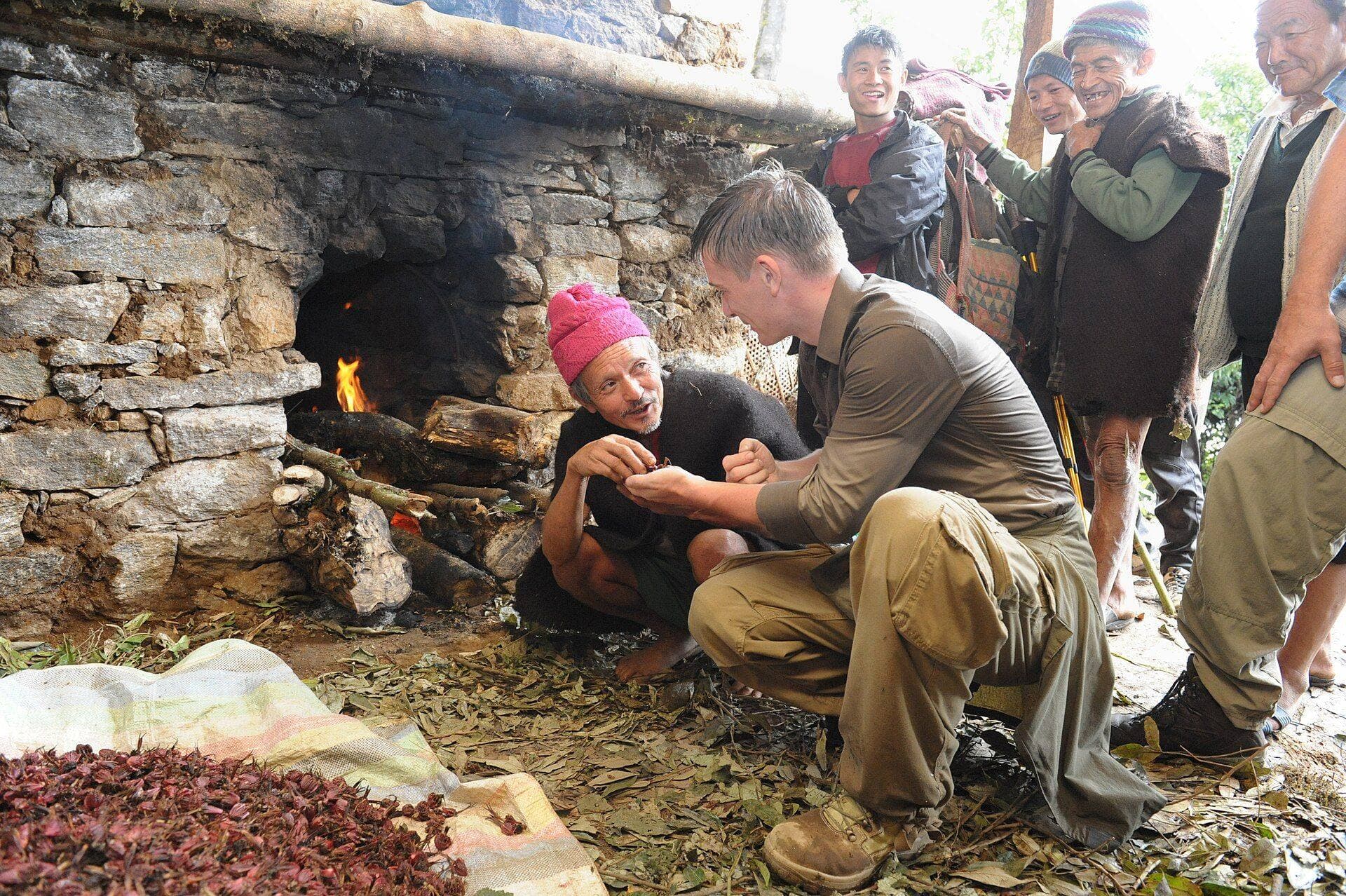
The pods grow under forest shade in the cool, wet hills of eastern Nepal, Ilam, Taplejung, Sankhuwasabha, and Panchthar. Farmers here have cultivated alainchi for generations, harvesting the capsules by hand each autumn. Our own lots come from a single growing cluster in Sankhuwasabha, in the Arun Valley. The story is on our origin page.
Then something strange happens. The majority of that crop is trucked across the open border, aggregated by traders in Siliguri, re-packed, and re-exported to Pakistan, the Gulf, and Bangladesh under other labels. The pod in your warehouse very likely started its life on a Nepali hillside. You just paid someone else for the detour.
The middleman markup: why re-exported cardamom costs nearly double
Every extra pair of hands between the farmer and your warehouse adds a margin. In the black cardamom trade, those hands stack up fast: village collector, border trader, re-packer, exporter, and sometimes a regional distributor on top.
By the time re-exported cardamom reaches a buyer in Karachi, Dubai, or Dhaka, it often costs nearly twice what the same pods sell for at origin. You are not paying for better quality. You are paying for logistics you didn't ask for and branding you don't need.
Sourcing from a large cardamom exporter at origin flips that equation:
- Lower landed cost. Removing two or three middle layers typically saves serious money per kilogram. On a container-scale black cardamom bulk order, that difference funds your entire freight bill and more. See the full farmgate-to-landed arithmetic in our price per kg breakdown.
- Real traceability. You know the district, the harvest season, and the drying method, which matters more every year as food-safety rules tighten.
- Consistent supply. A direct relationship at origin means first access to the new crop each November, not whatever stock the re-packers release.
The smoky, resinous flavor biryani chefs ask for
Nepali black cardamom is not just cheaper at source. For the biryani and halal food markets, it is the flavor profile buyers actually want: deep, smoky, and resinous, the note that carries through a pot of biryani, nihari, haleem, or pulao.
That profile is exactly why restaurant owners in Lahore, Dubai, Jeddah, and East London specify badi elaichi by aroma, not just by size. A pale, lightly dried pod disappears in a 50-litre biryani pot. A properly dried Nepali pod does not. For spice-blend manufacturers, the same applies: garam masala and biryani masala formulations built on Nepali black cardamom need fewer pods to hit the same intensity, a cost advantage in itself.
Know your grades before you order
Serious buyers order by grade, not just by price. Nepali black cardamom sorts into three commercial bands. You will also hear the South Asian trade names Jumbo Jet, Bold, and Ordinary used for roughly the same tiers. The full specifications live on our products and grades page.
| Grade | Pod size | Trade name | Best for |
|---|---|---|---|
| Bold | 22–28mm | “Jumbo Jet” | Gulf retail packing and high-end restaurant supply: the pod is visible whole in the dish. |
| Medium | 18–22mm | “Bold” | The workhorse export grade: biryani restaurant chains, wholesale spice markets, own-brand retail packers. |
| Fine | Under 18mm | “Ordinary” | Masala manufacturers and spice mills: grinding removes the size premium, so this is maximum flavor per dollar. |
If you're not sure which grade fits your market, order a graded sample set and compare them side by side before committing to volume.
Black cardamom supplier Nepal: what direct sourcing looks like
Buying direct from Nepal is simpler than most first-time importers expect. Here is how a typical order flows.
Step 1: Samples and specifications
Start with 200–500g samples of each grade you're considering. A credible Nepali black cardamom exporter will send them with a specification sheet: pod size, moisture content, admixture percentage, and harvest season. Judge the aroma yourself. That's the product.
Step 2: Quotation and documents
Request a quote against a specific grade, quantity, and delivery term (FOB Kathmandu or CIF to your port). Ask what travels with the shipment: certificate of origin, phytosanitary certificate, and lab test reports. If a supplier hesitates on documents, walk away. The Incoterms themselves are defined under the ICC Incoterms rules.
Step 3: Shipping
Air freight from Kathmandu reaches Dubai, Karachi, Riyadh, Dhaka, or London within days and suits orders up to a few tonnes. Larger black cardamom bulk orders move by sea through Kolkata port under transit arrangements. A good exporter handles the paperwork on the Nepal side either way, our lanes and terms are on the export markets page.
Frequently asked questions
What is the minimum order quantity (MOQ) for Nepali black cardamom?
Most Nepali exporters, including us, accept trial orders from a single 25kg sack, so you can test the product and the relationship before scaling to pallet or container volume.
Can you ship black cardamom to Pakistan, UAE, Saudi Arabia, Bangladesh, and the UK?
Yes, these are the core markets for Nepali black cardamom. Air freight from Kathmandu serves all five directly, and sea freight through Kolkata port is available for full-container loads. Every quote states the Incoterm clearly so you know exactly what is included.
Which black cardamom grade should I buy?
Whole-pod markets (Gulf retail and restaurants) should buy Bold (22–28mm, traded in South Asian markets as Jumbo Jet) or Medium (18–22mm). Grinders and masala manufacturers should buy Fine (under 18mm, often called Ordinary) and keep the savings, since milling removes the size premium entirely. When in doubt, sample all three.
What certifications and documents come with a shipment?
A standard export pack includes a certificate of origin, phytosanitary certificate, and per-lot lab reports covering moisture, PAHs, and other food-safety parameters. Halal-market buyers should note that black cardamom is a raw botanical product; we can supply the supporting documentation your certifier requires.
How do I get samples of Nepali black cardamom?
Send an enquiry with your company name, market, and intended use. Qualified buyers receive 200–500g graded samples with specification sheets, usually shipped within a week by courier.
Buy direct, keep the margin
Nepal grows the world's finest black cardamom, and more of it than anyone else. Yet for decades, the growers' names have been stripped off the sacks while middlemen collected nearly half the final price.
Smart importers are closing that gap. Working with a black cardamom supplier Nepal buyers can verify (with real documents, graded lots, and the smoky depth the biryani market expects, straight from the eastern hills) means better cardamom at a better price, season after season.