| If you have... | Use this per 1 black pod | Result |
|---|---|---|
| Smoked paprika and green cardamom | 2 green pods plus a small pinch (about 1/8 tsp) of smoked paprika | Closest: smoke and a cool edge, slightly sweeter |
| Green cardamom only | 2 to 3 green pods | Cool and aromatic, no smoke |
| Cloves and bay leaves | 1 clove plus 1 bay leaf | Warm depth, no smoke |
| Lapsang souchong tea | About 1/4 tsp leaves in muslin, out after 10 minutes | Real woodsmoke, no camphor |
| Nothing at all | Leave it out; add 1 bay leaf | Lighter, still a good dish |
What are you actually replacing?
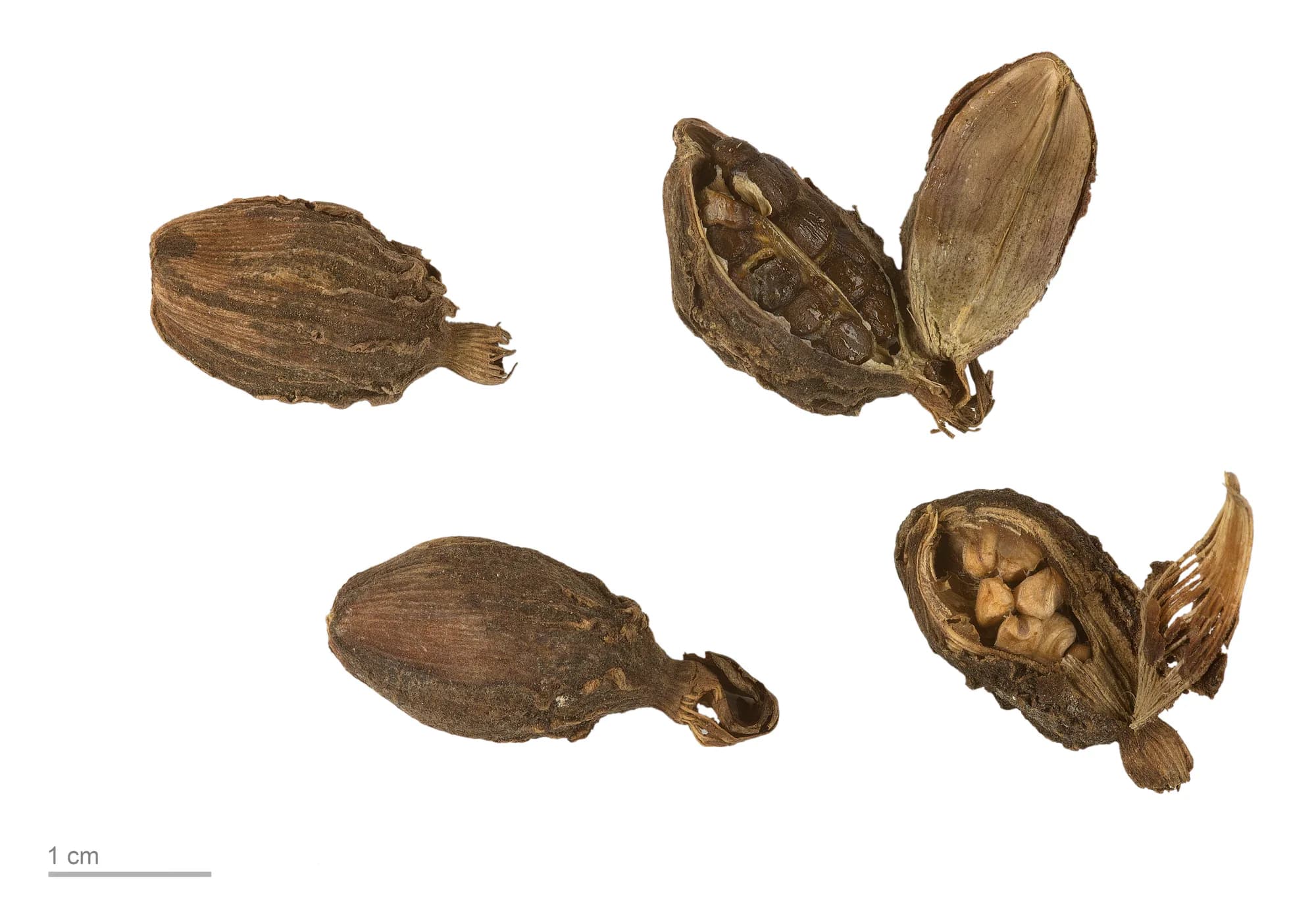
Black cardamom does four jobs in a dish: smoke, camphor, a cool menthol edge and a resinous depth. A good substitute replaces the job the pod was doing in your recipe, not its exact flavour.
It is a base note, not a top note. In a curry or a pot of rice you rarely taste it as a separate flavour. You notice it as warmth and body, and you notice its absence as a dish that tastes flatter than it should.
The pod is the dried fruit of Amomum subulatum, a different plant from green cardamom, grown in the eastern Himalayas. Our complete guide to black cardamom covers where it comes from and how it is cooked, and every note in its flavour is broken down in what cardamom tastes and smells like.
So ask which job matters most: in biryani the smoke, in a braise the depth.
The best black cardamom substitutes, ranked
Closest first. Each ratio is for one black pod; taste near the end and adjust.
1. Smoked paprika plus green cardamom (closest overall)
Per pod: 2 cracked green cardamom pods plus a small pinch, about 1/8 teaspoon, of smoked paprika. The green pods bring the cool, camphor-like note; the paprika brings smoke. It misses the resin, and it is slightly sweeter. It survives biryani, curries, stews and dal. Keep the paprika small, or it adds colour and a sweet pepper taste.
2. Green cardamom plus a bay leaf (when smoke matters less)
Per pod: 2 cracked green pods and 1 bay leaf. Bay is rich in 1,8-cineole, the same cooling compound as black cardamom, so together they cover the cool and the depth. There is no smoke. Good in pulao, lentil soups and chicken curries.
3. Cloves plus bay leaf (for depth in long braises)
Per pod: 1 clove and 1 bay leaf. Clove gives a warm, slightly numbing depth that holds up over hours. It misses the smoke and the camphor, and more than one clove takes over. Best in lamb and goat braises, stews and stocks.
4. A pinch of lapsang souchong tea (smoke, used sparingly)
Per pod: about 1/4 teaspoon of the pine-smoked tea leaves, tied in muslin or a tea bag, simmered with the dish and removed after 10 minutes. It gives the most convincing woodsmoke of any swap, but no camphor, and left in too long it turns bitter. Pair it with a green pod for curries and stews.
5. Green cardamom alone (weakest, but fine in some rice dishes)
Per pod: 2 to 3 cracked green pods. Aromatic and cool, but sweeter, with no smoke. Fine in pulao; weak in rich meat curries.
6. Tsaoko, if you happen to have it
Tsaoko is a different plant, Lanxangia tsaoko, sometimes sold as black cardamom. It is musky and medicinal rather than smoky, and it works in long braises. Match by weight: roughly half a medium tsaoko pod per black pod. The differences are set out in black cardamom versus tsaoko.
| Substitute | Per 1 black pod | Gets right | Misses | Best for |
|---|---|---|---|---|
| Smoked paprika + green cardamom | 2 green pods + about 1/8 tsp | Smoke, cool edge | Resin | Biryani, curries, dal |
| Green cardamom + bay leaf | 2 green pods + 1 leaf | Cool edge, depth | Smoke | Pulao, chicken, lentils |
| Cloves + bay leaf | 1 clove + 1 leaf | Depth over long cooking | Smoke, camphor | Braises, stews, stocks |
| Lapsang souchong | About 1/4 tsp, 10 minutes | Woodsmoke | Camphor, cool | Curries, stews |
| Green cardamom alone | 2 to 3 green pods | Cool, aroma | Smoke, depth | Light rice dishes |
| Tsaoko | About half a pod, by weight | Depth, resin | Smoke | Long braises |
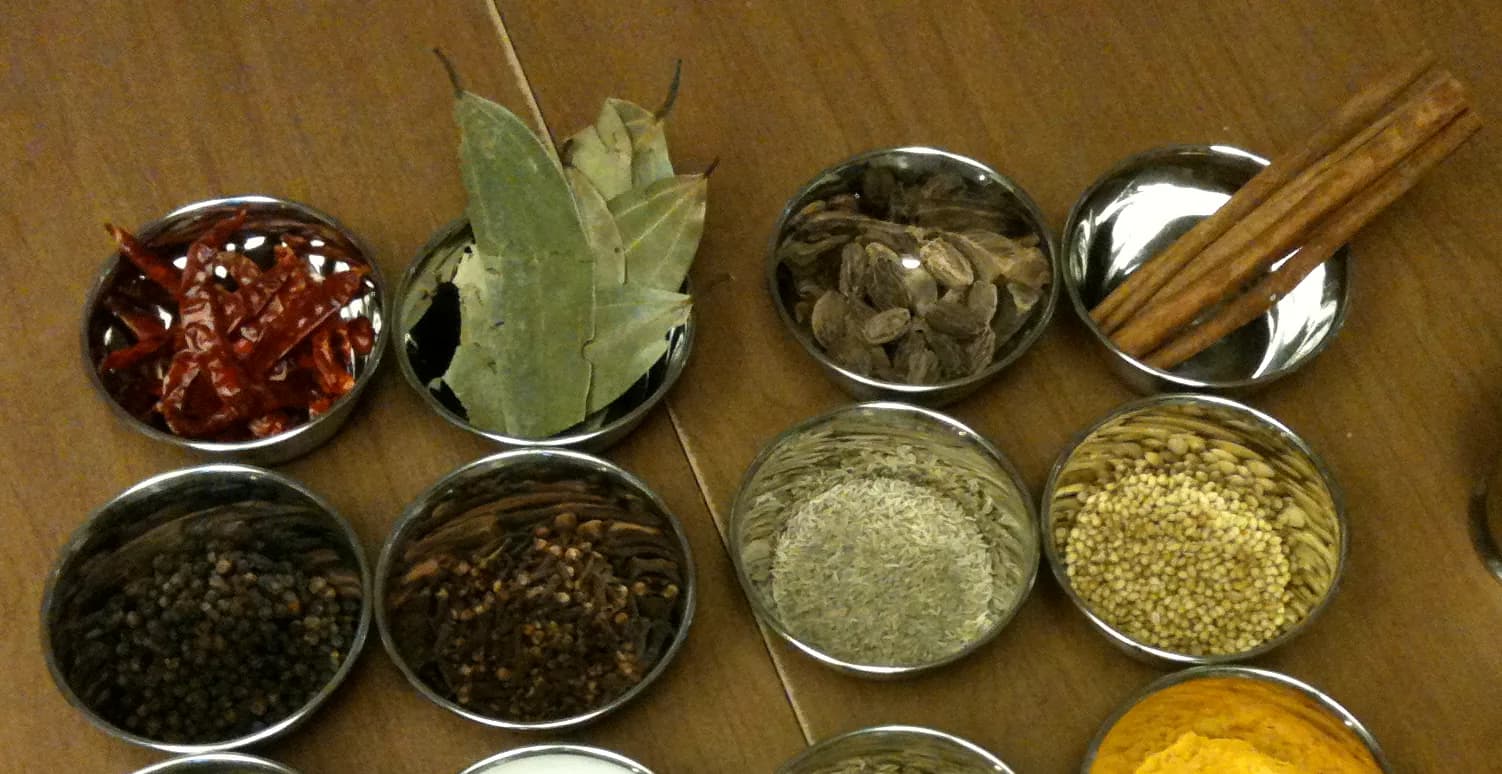
Can I use green cardamom instead of black cardamom?
In savoury dishes, partly. Use 2 to 3 cracked green pods per black pod, and expect to lose all the smoke.
Green cardamom shares black cardamom's cool, eucalyptus-like note, which is why it gets closer than most spices. But it is sweeter, more floral and has none of the woodsmoke, so on its own a curry tastes lighter and more perfumed than intended.
To close the gap, add a small pinch of smoked paprika. That one addition turns green cardamom from a weak swap into the closest one on this page.
Never go the other way in sweets. Black cardamom's smoke and camphor taste medicinal in a dessert, a milky drink or a cake. The full side-by-side is in black cardamom versus green cardamom.
What does not work
Some swaps that look sensible make the dish worse.
- Supermarket ground cardamom. It is almost always green cardamom, so it adds sweetness and perfume, not smoke. Treat it as green cardamom and add paprika.
- An old open jar of ground black cardamom. After a year open, most of the smoke and cool notes have gone, leaving bitterness. Smell it first: if it smells faint, it will taste faint. Why jars differ so much is explained in black cardamom seeds versus pods.
- Liquid smoke in quantity. It is far stronger than the smoke on a pod and quickly tastes chemical. If you use it at all, use a single drop.
- Star anise in quantity. It is a strong base spice too, but it pulls the dish towards liquorice, which black cardamom never tastes of.
- Skipping it in biryani with nothing else. Biryani leans on that smoky base more than most dishes. Leave the pod out and add smoke another way, or the rice tastes flat.
Substitutes by dish
Starting points for a typical home recipe. For how the real pod is used in each, see how to use black cardamom.
Biryani and pulao
The best black cardamom substitute for biryani covers the smoke. For about 500g of rice, add 2 cracked green pods and a bay leaf to the rice water, and a small pinch of smoked paprika to the masala. For a stronger smoky finish, use the traditional dhungarmethod: set a small bowl on the rice, add a piece of hot charcoal, pour a little ghee over it, and cover the pot for a couple of minutes. Open a window. More on the pod's role in black cardamom in biryani.
Meat curries and nihari
Per kilogram of meat, use 2 green pods, a small pinch of smoked paprika and 1 clove, bloomed in the oil at the start.
Dal
Add a bay leaf to the tempering and a small pinch of smoked paprika at the end, or give the finished dal the same charcoal treatment as biryani.
Braises and stews
Use 1 clove and 1 bay leaf per black pod the recipe asks for. Long, slow cooking suits them, and they hold their depth over hours.
Garam masala and spice blends
Work by weight. For every 10g of black cardamom in the recipe, use 6g of green cardamom pods and 1g of smoked paprika, ground together.
Tea
Per cup, use 1 cracked green pod and a few leaves of lapsang souchong in the pot, for a smoky cup. The original is in how to brew black cardamom tea.
Why the smoke is so hard to fake: a grower's note
We grow black cardamom in Sankhuwasabha, in eastern Nepal, and the smoke you are trying to replace is made in the drying, not the field.
After harvest we dry the pods over a wood fire in a bhatti, a traditional kiln. The smoke soaks into the tough, ridged husk over many hours, and the husk holds it long after drying. That is why a dash of smoke from another spice gets close but never quite matches it: it sits on top of the dish rather than coming out of the pod slowly as it cooks.
The same pods dried with indirect heat taste of camphor and resin with far less smoke. That is also why some cooks find a green cardamom swap closer than they expected: if the black cardamom they know was dried gently, the smoke was never the main note. We compare the two in bhatti-dried versus machine-dried black cardamom.
Going the other way
If a recipe calls for green cardamom and you only have black: in sweets, do not. Black cardamom's smoke and camphor taste medicinal against sugar and cream.
In savoury dishes it can work. Use half a black pod for every 2 green pods, and expect a smokier, deeper result than the recipe intended. With no cardamom of either kind, our guide to substitutes for green cardamom has ratios by dish.
Frequently asked questions
What is the best substitute for black cardamom?
The closest is a small pinch of smoked paprika plus 2 cracked green cardamom pods for each black pod. The paprika brings smoke and the green cardamom brings the cool, camphor-like note. It is not identical, because black cardamom's smoke comes from drying over a wood fire, but in curries, biryani and stews most people will not notice.
Can I use green cardamom instead of black cardamom?
In savoury dishes, partly. Use 2 to 3 cracked green pods per black pod and add a small pinch of smoked paprika, because green cardamom brings the cool note but none of the smoke. Never swap the other way in sweets: black cardamom's smoke and camphor taste medicinal in desserts and sweet drinks.
Can I leave black cardamom out of a recipe?
Yes. Most dishes still work without it, just with a lighter, less smoky base. Add a bay leaf in its place to keep some depth and a cool edge. The dish where you will miss it most is biryani, where it is worth adding smoke another way, such as a pinch of smoked paprika in the masala.
Is smoked paprika a good substitute for black cardamom?
It is the best single source of the smoke, but on its own it misses the camphor and cool menthol notes. Use a small pinch, about an eighth of a teaspoon per black pod, and pair it with 2 green cardamom pods. Too much paprika adds colour and a sweet pepper taste that black cardamom does not have.
How much substitute do I use for one black cardamom pod?
Start with 2 cracked green cardamom pods and a small pinch of smoked paprika, about an eighth of a teaspoon. Without paprika, use 2 to 3 green pods and a bay leaf. For a long braise, 1 clove and 1 bay leaf work instead. Taste near the end and add more only if the dish needs it.
What can I use instead of black cardamom in biryani?
For about 500g of rice, put 2 cracked green cardamom pods and a bay leaf in the rice water, and a small pinch of smoked paprika in the masala. For a stronger smoky finish, smoke the finished pot for a couple of minutes with a piece of hot charcoal and a little ghee, the traditional dhungar method.
Is tsaoko the same as black cardamom?
No. Tsaoko, or cao guo, is Lanxangia tsaoko, a different plant grown in Yunnan, northern Vietnam and Laos. It is sometimes sold as black cardamom, but it tastes musky and medicinal rather than smoky. It works as a substitute in long braises if you match by weight, roughly half a medium tsaoko pod per black pod.
Can I use ground black cardamom instead of whole pods?
Yes, if it is fresh. Use about a quarter of a teaspoon per whole pod and add it later in the cooking, because ground spice releases its flavour quickly and can turn bitter in a long simmer. An old, open jar of ground black cardamom will have lost most of its smoke, so smell it before you use it.