The three rules
This is how to cook with black cardamom in three rules. Get them right and most dishes take care of themselves.
- Add it early. The smoke and camphor need time, usually 20 minutes or more, to soften and settle into the dish. Added late, they sit on top and taste raw.
- Use fewer pods than you think. Black cardamom is a base note, not a top note. One pod flavours a kilogram of meat; three will dominate it.
- Take the husk out before serving. Treat it like a bay leaf: it flavours the pot, then comes out.
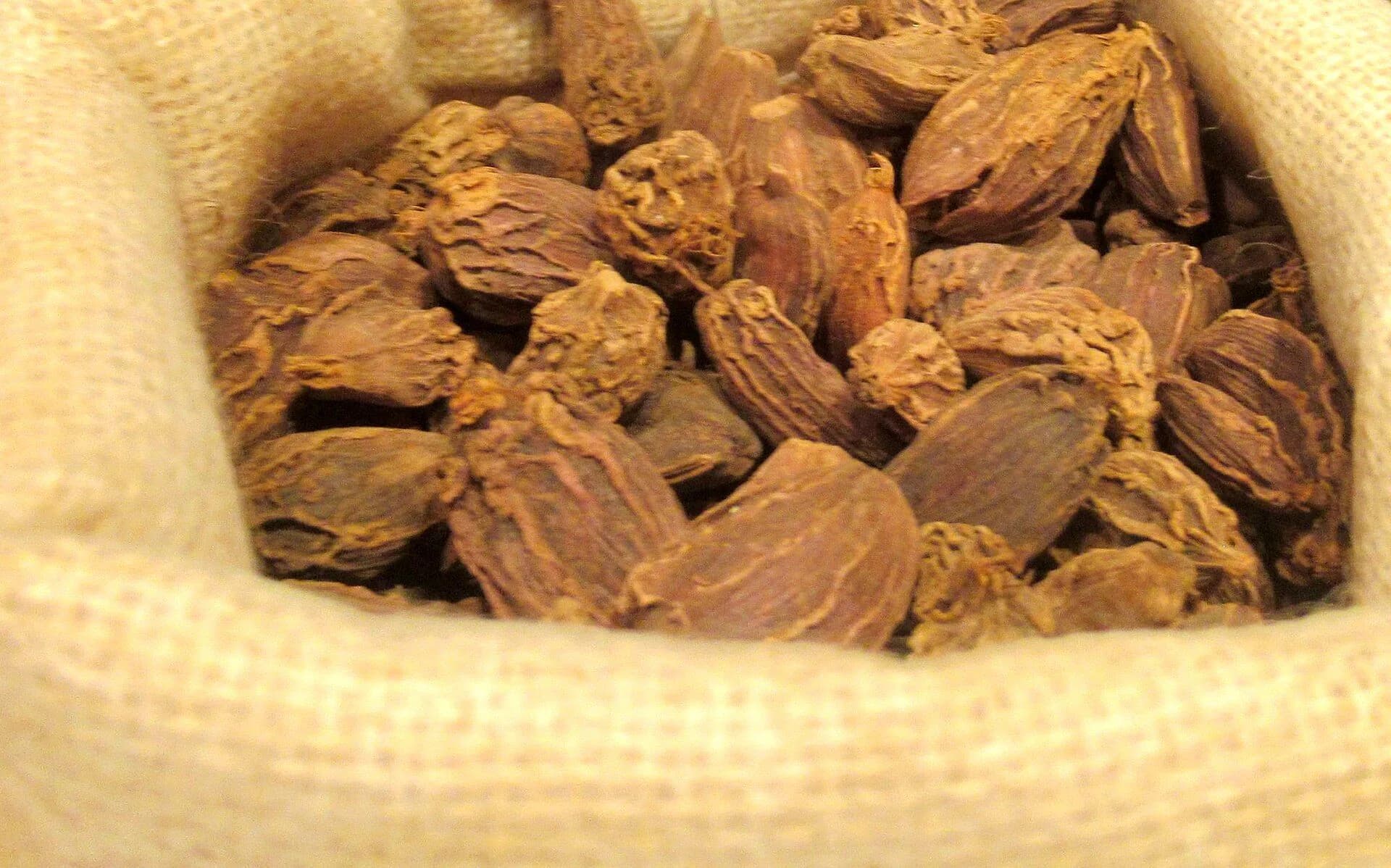
If you are new to the spice itself, start with our complete guide to black cardamom, the dried pod of Amomum subulatum from the eastern Himalayas.
Black cardamom uses: what is black cardamom used for?
Black cardamom is used in savoury, slow-cooked dishes: rice, meat curries, dal, stocks and spice blends. It gives them a smoky, cooling depth that sits underneath the other flavours.
Its home is the cooking of North India, Pakistan and Nepal, but its job travels well. Anywhere a dish wants smoke and backbone without chilli heat, a pod can go in. The same job is why badi elaichi uses centre on rice and meat rather than on sweets, which belong to green cardamom.
| Cuisine | Dish | How it is used |
|---|---|---|
| North Indian | Biryani, pulao, rogan josh, nihari, garam masala | Whole in hot fat at the start; ground in blends |
| Pakistani | Biryani, korma, yakhni | Whole with the meat, or in the stock |
| Nepali | Meat curries, rice, tea | Cracked in fat for curries; a pod in rice and winter tea |
| Bengali | Mutton curries, Kolkata-style biryani | Whole with the other whole spices |
| Afghan and Central Asian | Pulao and its spice mix | Ground into the spice mix for the rice |
| Western kitchens | Stocks, braises, slow-cooked beans | One pod in the pot for smoky depth |
For the dish it is best known for, see black cardamom in biryani; for the cup, see how to brew black cardamom tea.
Preparing the pod: whole, bruised or cracked
Crack pods lightly for most cooking, leave them whole for long simmers, and take the seeds out only for spice blends.
- Whole: gentle smoke over a long cook. Best for stocks and braises that simmer for an hour or more.
- Bruised: press under the flat of a knife until it just gives. A balance of smoke and cool, for rice and stews.
- Cracked: press until the husk splits. Faster, stronger extraction, for curries, biryani and dal.
- Seeds only: scraped out and ground, for spice blends and rubs.
The reason is in the pod: the husk carries most of the smoke and the seeds carry the cooling menthol and camphor, so the more you open it, the more menthol you get. The full explanation is in black cardamom seeds versus pods.
Should you toast black cardamom?
Toast it dry only for spice blends. For curries and rice, bloom it in hot fat instead, which does the same job in the pan.
Dry toasting, for blends
Put whole pods in a dry pan over medium-low heat and shake the pan for 1 to 2 minutes, until they smell smoky and fragrant. Let them cool for a few minutes, then grind. Toasting sharpens the aroma and makes the husk easier to grind.
Blooming in fat, for curries and rice
This is the standard method. Heat oil or ghee over medium heat, add the cracked pod with the other whole spices, and let it sizzle for 20 to 40 seconds, until it smells of smoke. Then add the onions straight away, which cools the pan and stops the spices burning.
When to skip toasting
For stocks, yakhni and long braises where the pod goes in with the liquid, skip it. An hour of simmering extracts everything, and there is no fat stage to bloom it in.
What burnt smells like
Acrid and bitter, with the smoke turned harsh. A burnt pod will make the whole dish bitter, and no amount of later cooking fixes it. Wipe the pan and start again with fresh fat and a new pod.
When to add black cardamom
At the start of the cook, almost always. Where exactly depends on the dish.
- Curries and dal: in hot fat at the very start, before the onions, for 20 to 40 seconds.
- Pulao and biryani: with the rice and water, or bloomed in the fat before the rice goes in.
- Stocks and yakhni: in cold water at the start, so the flavour draws out slowly as it heats.
Adding it late gives a raw, medicinal edge. The camphor needs heat and time, usually 20 minutes or more, to round off; dropped in for the last five minutes it stays sharp and sits on top of the dish.
Pressure cooker or slow simmer: a pressure cooker extracts flavour faster, so use one pod fewer than for a slow simmer. A slow-cooked dish of two hours or more can take a whole, uncracked pod and still come out full of smoke.
How many black cardamom pods to use
Start with one pod per kilogram of meat or per two cups of rice, then adjust. Black cardamom per kg is lower than most people expect, because a single pod carries a lot of smoke.
These counts assume average, medium-sized pods and a typical home recipe. Taste near the end, and add a pod next time rather than doubling up now.
| Dish | Quantity | Pods | Whole or cracked | Add when | Remove? |
|---|---|---|---|---|---|
| Biryani | 1 kg rice | 2 to 3 | Cracked | In the fat or rice water, at the start | Push aside or remove |
| Pulao | 2 cups rice | 1 | Lightly cracked | In the fat, before the rice | Yes |
| Meat curry | 1 kg meat | 1 to 2 | Cracked | Bloomed in fat at the start | Yes |
| Dal | 250g dry lentils | 1 | Whole or bruised | With the lentils, or in the tempering | Yes |
| Braise or stew | 1 kg meat | 1 to 2 | Whole | At the start, with the liquid | Yes |
| Stock or yakhni | Per litre of water | 1 | Bruised | In cold water at the start | Strain out |
| Tea | Per 250ml cup | 1 | Cracked | Steep 3 to 5 minutes | Strain out |
| Garam masala | By weight | 5 to 10% of the blend | Whole pods, toasted | Ground with the other spices | No, ground in |
What changes the number:
- Smokier bhatti-dried pods need fewer than gently dried ones; see bhatti-dried versus machine-dried.
- Bigger pods count for more: two small pods equal about one large.
- Longer cooks extract more, so a two-hour braise needs fewer.
- Cracked pods extract faster than whole ones.
Taking it out
Fish the pods out before serving, as you would a bay leaf. The husk is tough and not pleasant to bite into.
Count pods in and count them out: if you added two, look for two. For dishes with a lot going on, tie the pods in a small square of muslin and lift the whole bundle out at the end.
If you ground the pod into the dish by mistake, you cannot take it out. Stir in a squeeze of lemon and a spoonful of yoghurt or cream to soften the camphor, and use half as much next time.
Where black cardamom does not belong
Most desserts, delicate fish, light dressings and anything that wants a floral note. In all of these, use green cardamom instead.
Its smoke and camphor taste medicinal against sugar and cream, and they overwhelm white fish and fresh salads. Black cardamom needs fat, heat and time to round off, and none of those dishes gives it that. The two spices are set side by side in black cardamom versus green cardamom, and every note in their flavour is broken down in what cardamom tastes and smells like.
How we use it at home in eastern Nepal
We grow black cardamom in Sankhuwasabha, and at home we call it alainchi. Day to day, it is a savoury spice for meat and rice.
It goes into meat curries almost without thinking: one or two cracked pods into hot oil with the other whole spices, before the onions. In our kitchens it is the pod you find in goat and chicken curries, not in anything sweet.
When there are guests or a festival, it goes into the rice. A pod or two in a pot of pulao is what makes festive rice smell different from everyday rice.
In cold weather, a cracked pod goes into the tea, making a smoky, warming cup. It also turns up in pickles and in meat marinades.
What you will not see is anyone measuring. Cooks here use it by feel, and the feel is always less than a newcomer expects: a single pod flavours a whole pot.
Five mistakes to avoid
- Too many pods: three where one would do, and the dish tastes of camphor.
- Adding it late: in the last five minutes it stays raw and sharp.
- Using stale ground spice: a jar open for months has lost its smoke. Grind whole pods instead.
- Leaving the husk in the serving dish: someone will bite it. Lift pods out, or cook them in muslin.
- Treating it like green cardamom in sweets: it tastes medicinal. Use green for anything sweet.
Run out halfway through a recipe? Our guide to black cardamom substitutes ranks the closest swaps.
Storing it so it keeps its smoke
Keep pods whole, in an airtight jar, in the dark and away from the hob. Stored that way, whole pods keep their smoke for two to three years; ground black cardamom loses its top notes in four to six weeks.
Heat and light drive off the aromatic oils, so a jar beside the cooker goes flat fastest. Storage for every kind of cardamom is covered in our guide to what cardamom is.
Frequently asked questions
How do you use black cardamom?
Add it early, whole or lightly cracked, into hot oil or ghee at the start of a curry, or with the rice and water for pulao and biryani. Use about one pod per kilogram of meat or per two cups of rice. Let it cook with the dish, then take the husk out before serving, like a bay leaf.
What is black cardamom used for?
Savoury, slow-cooked dishes: biryani, pulao, meat curries such as rogan josh and nihari, dal, stocks such as yakhni, and garam masala. It adds a smoky, cooling, resinous depth underneath the other flavours. In Nepal it also goes into winter tea. It is not used in desserts, where green cardamom does the work.
How many black cardamom pods should I use?
Start with one pod per kilogram of meat, one per two cups of rice, and 2 to 3 per kilogram of rice in a biryani. For dal, one pod per 250g of dry lentils; for stock, one per litre; for tea, one per 250ml cup. It is strong, so start low and add another pod next time if you want more.
Should you toast black cardamom?
For spice blends, yes: dry-toast whole pods over medium-low heat for 1 to 2 minutes until fragrant, then grind. For curries and rice, bloom the pod in hot oil or ghee for 20 to 40 seconds instead. For stocks and long simmers where it goes in with the liquid, skip toasting altogether.
When do you add black cardamom to a curry?
At the very start. Put the cracked pod into hot oil or ghee with the other whole spices, let it sizzle for 20 to 40 seconds, then add the onions. Adding it late leaves a raw, medicinal edge, because the smoke and camphor have no time to soften into the dish.
Do you crack black cardamom before cooking?
Usually, lightly. Press the pod under the flat of a knife until the husk just splits, so the seeds' oils come out alongside the smoke on the husk. Leave it whole for stocks and braises that simmer for an hour or more, where a gentler, smokier result suits the dish.
Do you remove black cardamom before serving?
Yes. The husk is tough and not pleasant to eat, so lift it out before serving, as you would a bay leaf. Count the pods in and count them out. In biryani, cooks often leave them in and let people push them aside. Tying pods in muslin makes them easy to find.
Can you use black cardamom in desserts?
Almost never. Its smoke and camphor taste medicinal against sugar and cream, so it clashes with kheer, custards, cakes and sweet drinks. Use green cardamom for anything sweet. The rare exceptions are strong, dark flavours such as some chocolate or coffee recipes, and even there a tiny amount is plenty.
Can you reuse black cardamom pods?
A pod steeped in tea can be dried and used once more in a stock or a pot of rice, though it will be much weaker, because the seeds give up most of their oils the first time. Discard pods that have been cooked in meat, dairy or sauce, rather than keeping them to reuse.